
ASTM, AMS, and ISO Titanium Standards in 2026: Key Specification Updates for Global Buyers
A concise regulatory and technical briefing on recent revisions across ASTM, SAE AMS, and ISO titanium material standards — covering ultrasonic inspection harmonization, additive-manufactured feedstock rules, digital mill test certificates, and what procurement teams should update in 2027 purchase orders.
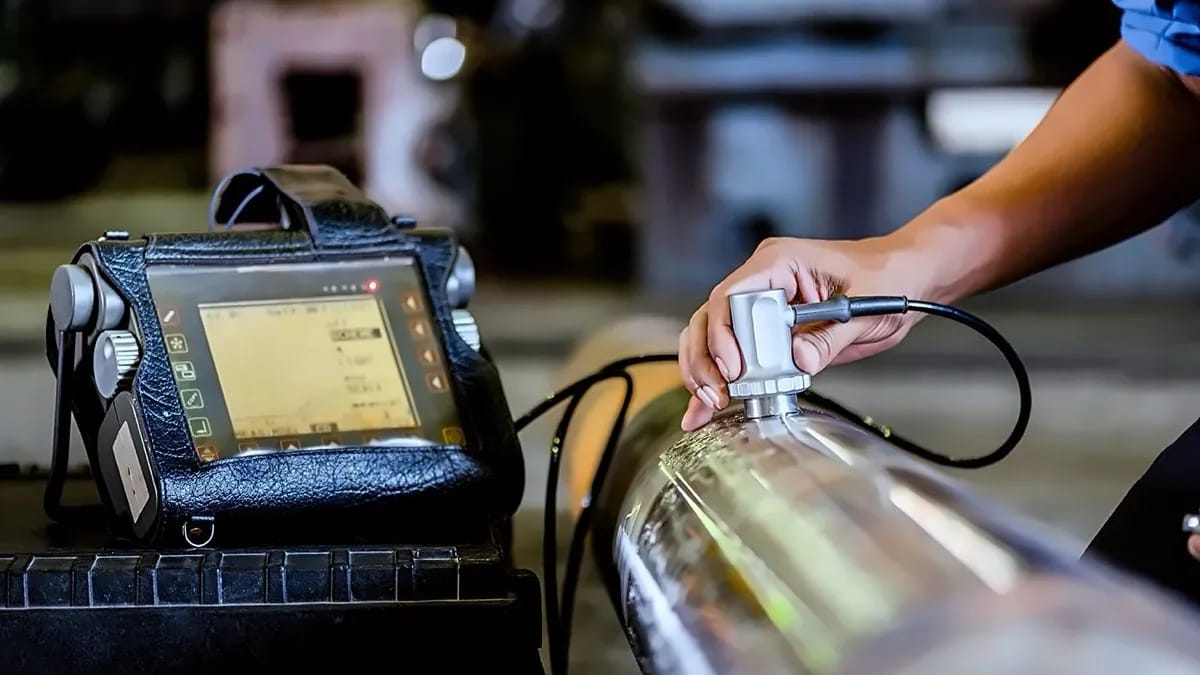
For procurement engineers and quality managers sourcing titanium mill products internationally, material standards are not static documents. Throughout 2026, technical committees at ASTM International (Committee B10 on Reactive and Refractory Metals), SAE International (AMS G Committee), and ISO have issued updates and harmonization clauses that directly affect how titanium bar, plate, tubing, and implant stock are inspected, certified, and accepted at incoming quality control.
Buying against obsolete standard revisions on engineering drawings is one of the most frequent causes of shipment holds during third-party inspection. Here are the key specification trends and compliance requirements every titanium buyer should incorporate into 2027 purchasing templates.
1. Tighter Ultrasonic Inspection Harmonization on Bar and Billet
Across aerospace and critical industrial specifications — including revisions aligned with AMS 4928, AMS 4967, and ASTM B348 — quality committees have placed greater emphasis on automated ultrasonic testing (UT) calibration and signal-to-noise ratio (SNR) thresholds per AMS 2631 and ASTM E2375.
For titanium round bar between 25 mm and 150 mm diameter, buyers are increasingly specifying Class AA or Class A1 ultrasonic inspection even for non-rotating structural and oilfield downhole components. The reason is straightforward: high-frequency phased-array UT detects both hard-alpha (nitrogen-rich) melt inclusions and subtle center-burst forging porosity that conventional single-crystal probes can miss. When issuing RFQs for Grade 5 (Ti-6Al-4V) bar above 50 mm diameter, explicitly stating the UT acceptance class on the purchase order eliminates ambiguity between industrial-grade and aerospace-grade stock.
2. Updated Interstitial and Microstructure Controls in Medical Titanium (ASTM F67 & F136)
In the medical device sector, alignment between ASTM F136 (Wrought Titanium-6Aluminum-4Vanadium ELI Alloy for Surgical Implant Applications) and ISO 5832-3 continues to tighten around alpha-beta microstructure uniformity and bar-surface conditioning.
Under European MDR (Medical Device Regulation) and FDA audit expectations in 2026, implant manufacturers are requiring mill test reports (MTRs) for ASTM F136 bar and wire to include high-magnification metallographic photomicrographs alongside standard tensile and chemical data. Specifically, mills must verify a fine, equiaxed alpha-beta structure free of continuous grain-boundary alpha networks, with beta transus temperature documented for every master heat. Procurement teams sourcing medical titanium bar should ensure their supplier provides metallographic certification and beta-transus data as standard deliverables rather than paid add-ons.
3. Expanded Coverage for Welded Heat Exchanger Tubing in ASTM B338
In industrial heat exchanger and desalination projects, the revision and industry adoption of ASTM B338 / ASME SB-338 provisions for automatic welded-and-cold-worked (W&CW) Grade 2 and Grade 12 tubing has accelerated in 2026.
Historically, several petrochemical EPC specifications restricted high-pressure condensers to seamless tubing due to concerns over weld-seam bead geometry and preferential corrosion. Modern ASTM B338 compliance protocols utilizing continuous eddy-current testing (ET), ultrasonic testing (UT), pneumatic underwater testing, and controlled bead-rolling prior to bright annealing have demonstrated weld-seam mechanical parity with parent strip. In 2026 project specifications across the Middle East and Southeast Asia, engineering firms have updated approved material lists to accept ASTM B338 welded Grade 2 tubing with specified bead-reduction ratios, lowering condenser tube bundle costs by 18–25 percent compared to seamless equivalents.
4. Digital Mill Test Certificates (EN 10204 3.1) and Ingot-to-Part Traceability
Following heightened global scrutiny of aerospace and defense supply chain provenance in 2025–2026, OEM buyers have tightened verification procedures for EN 10204 Type 3.1 and 3.2 material certificates. Rather than accepting re-typed distributor certificates, major Tier 1 buyers now require:
- Full melt-source disclosure showing the primary sponge source and VAR/EB (Vacuum Arc Remelting / Electron Beam Cold Hearth) ingot heat numbers
- Cryptographically signed or QR-verifiable digital mill certificates linked directly to the producing mill's quality database
- Dual-certification formatting (for example, certifying plate simultaneously to ASTM B265 Grade 2 and ASME SB-265 Grade 2, or bar simultaneously to ASTM B348 Grade 5, AMS 4928, and ASTM F136 where chemistry and processing meet the most stringent overlapping limits)
Actionable Checklist for 2027 Purchase Orders
Before locking in annual supply agreements for 2027, review your company's standard titanium purchasing specifications against these four points:
- Replace generic calls like "Grade 5 Titanium Bar" with the exact specification, condition, and UT class (e.g., ASTM B348 Grade 5, Annealed, Centerless Ground h9, UT per AMS 2631 Class A).
- Specify whether ASME "SB" dual certification is required if the material will be welded into a coded pressure vessel or heat exchanger.
- Require full master-heat ingot traceability and original mill test certificates (EN 10204 3.1) on all shipments, even when buying small lots.
- For medical and aerospace orders, state microstructure acceptance standards (such as ETTC2 / AMS 2380) upfront on the drawing.
BAOTI maintains active compliance across ASTM, ASME, SAE AMS, ISO, and GB/T standards, with an AS9100 and ISO 9001 certified metallurgical laboratory providing complete chemical, mechanical, metallographic, and NDT documentation with every shipment. Contact our quality and sales engineering team to verify specification cross-references for your upcoming projects.
Frequently Asked Questions
What is the difference between ASTM B265 and ASME SB-265 for titanium plate?
Technically, the chemical composition and mechanical property tables of ASTM B265 and ASME SB-265 are identical. However, ASME SB-265 certification requires the producing mill to operate under an ASME-compliant quality system so the material can be legally used in coded pressure vessels and heat exchangers under ASME Boiler and Pressure Vessel Code Section VIII.
Can a single batch of titanium bar be dual-certified to ASTM B348 Grade 5 and ASTM F136?
Yes, provided the master ingot was melted to the tighter Extra-Low Interstitial (ELI) chemical limits of ASTM F136 (oxygen ≤ 0.13%, iron ≤ 0.25%) and processed to meet the strength requirements of ASTM B348 Grade 5 (UTS ≥ 895 MPa, YS ≥ 828 MPa) as well as the alpha-beta microstructure requirements of ASTM F136.
What ultrasonic testing standard should be specified on titanium bar purchase orders?
For aerospace and critical industrial applications, buyers should specify ultrasonic inspection per AMS 2631 or ASTM E2375, explicitly stating the required acceptance class (such as Class AA, Class A1, or Class A) based on component criticality.
Related Reading

TITANIUM USA 2026: What Buyers and Engineers Should Expect at This Year's Premier Titanium Conference
A preview of TITANIUM USA 2026, the International Titanium Association's annual conference and exhibition in Orlando — covering key themes, exhibitor highlights, technical sessions on additive manufacturing and sustainability, and practical guidance for attendees planning procurement meetings.

Q3 2026 Titanium Market Update: Aerospace Demand Drives Sponge Prices to 18-Month High
A quarterly snapshot of global titanium market conditions heading into Q3 2026 — covering sponge pricing, mill product demand by sector, China export volumes, and supply-side capacity changes that procurement teams should factor into forward contracts.

Farnborough International Airshow 2026 Highlights: 1,200+ Exhibitors Gather for the World's Largest Aerospace Trade Event
The Farnborough International Airshow 2026 brought together over 1,200 exhibitors and 80,000 trade visitors in Hampshire, UK, featuring aerospace giants Airbus, Boeing, Safran, and Rolls-Royce. BAOTI attended the event to connect with global aerospace buyers and explore new partnership opportunities.

China Titanium Exports in H2 2026: Product Mix Shifts Toward Higher-Value Mill Products
An analysis of China's titanium mill product exports in the second half of 2026 — covering volume trends by product type, geographic shifts in buyer markets, pricing dynamics, and what the data signals for international procurement teams planning 2027 sourcing.