
China Titanium Exports in H2 2026: Product Mix Shifts Toward Higher-Value Mill Products
An analysis of China's titanium mill product exports in the second half of 2026 — covering volume trends by product type, geographic shifts in buyer markets, pricing dynamics, and what the data signals for international procurement teams planning 2027 sourcing.
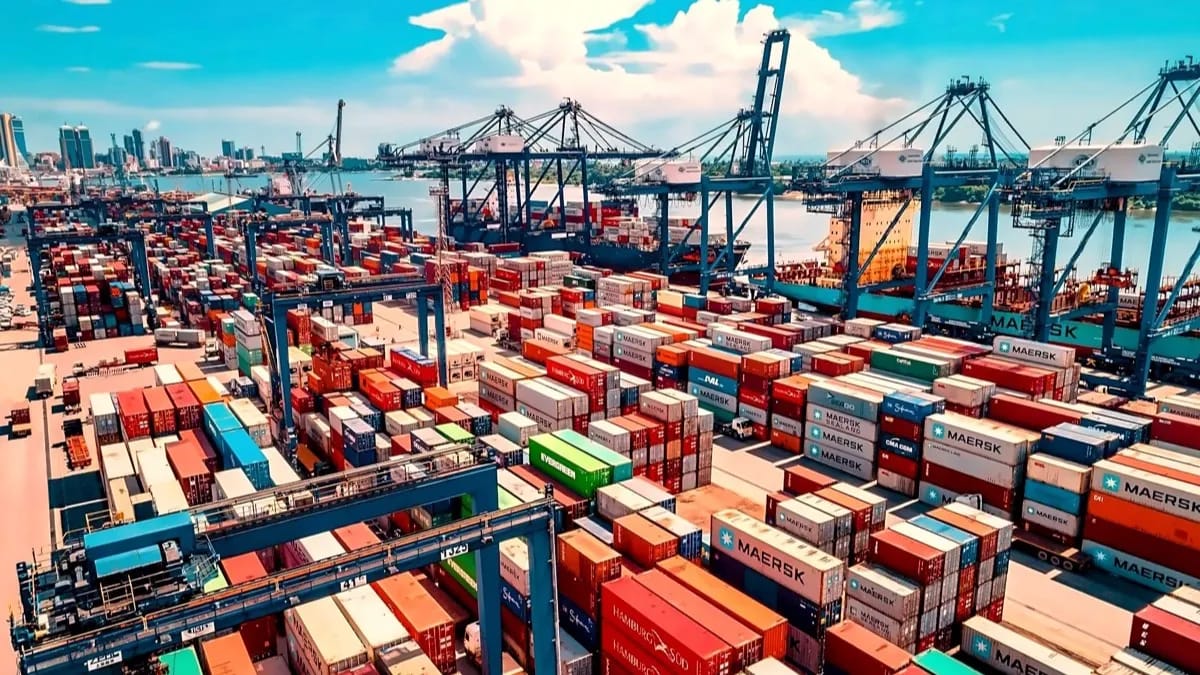
China's titanium mill product exports in the second half of 2026 are on track to reach approximately 52,000 tonnes, bringing the full-year total to an estimated 100,000 tonnes — a 4 percent increase over 2025. But the headline volume figure masks a more significant story: the product mix is shifting decisively toward higher-value items, and the geographic distribution of buyers is evolving in ways that matter for procurement strategy.
Volume by Product Type
Preliminary customs data through September 2026 shows clear divergence by product category:
Plate and sheet exports rose 14 percent year-over-year in H2, driven by demand from Southeast Asian chemical processing projects and Middle Eastern desalination plants. Grade 2 plate in thicknesses of 6–20 mm accounted for the largest share, with Grade 5 aerospace plate growing from a low base as more Chinese mills achieve Western aerospace qualification.
Bar and billet exports declined 3 percent, continuing the trend from H1. Domestic consumption of titanium bar by China's own aerospace and medical device industries is absorbing more of the output that previously went to export. Bar exports to Europe fell particularly sharply as European aerospace Tier 1 suppliers consolidated their supply chains with domestic and Japanese producers.
Tube and pipe exports grew 8 percent, with the strongest growth in seamless tube for heat exchanger applications. Vietnam, Indonesia, and India accounted for over 60 percent of tube export volume as these countries expand their chemical and petrochemical processing infrastructure.
Forgings and finished parts exports jumped 22 percent, the fastest-growing category. This reflects Chinese titanium producers' strategic move up the value chain — exporting near-net-shape forgings and machined components rather than raw mill products. The average export price per kilogram for forgings is 3–4 times higher than for bar stock.
Geographic Shifts
The destination map for Chinese titanium exports continued to evolve in H2 2026:
Southeast Asia is now the largest regional buyer of Chinese titanium, overtaking Europe for the first time. Vietnam, Indonesia, Thailand, and India collectively imported approximately 18,000 tonnes of Chinese titanium mill products in H2 2026, up 19 percent year-over-year. The growth is driven by infrastructure investment in chemical processing, power generation, and marine equipment.
Europe reduced its Chinese titanium imports by approximately 7 percent in H2, reflecting a combination of reshoring preferences, tightening quality audit requirements, and the growing availability of European and Turkish titanium supply. However, European buyers continue to source specialized products — thin-gauge sheet, small-diameter tube, and custom forgings — from China where domestic European availability is limited.
North America remained relatively stable, with Chinese titanium imports roughly flat year-over-year. The U.S. market continues to source primarily commodity-grade CP titanium products from China while relying on domestic and Japanese producers for aerospace-certified material.
Middle East emerged as a notable growth market, with titanium imports from China increasing 25 percent in H2 2026. Saudi Arabia's industrial diversification program and the UAE's expanding petrochemical sector are creating new demand for titanium heat exchangers, pressure vessels, and piping systems.
Pricing Trends
Chinese titanium export pricing in H2 2026 reflected the tighter supply-demand balance in the global market:
- Grade 2 plate (6–20 mm): FOB China pricing averaged USD 18–22/kg, up approximately 8 percent from H1 2026
- Grade 2 seamless tube: FOB pricing averaged USD 25–35/kg depending on OD and wall thickness
- Grade 5 bar: FOB pricing averaged USD 35–45/kg for standard diameters, a 6 percent increase year-over-year
- Grade 5 forgings: FOB pricing ranged from USD 60–120/kg depending on complexity and certification requirements
The pricing increases were driven primarily by higher titanium sponge costs (up 14 percent in 2026) and tighter availability of Grade 5 alloy material globally. Chinese producers maintained relatively thin margins on commodity products while capturing higher margins on forgings and finished parts — reinforcing the strategic shift toward value-added exports.
Quality and Certification Landscape
A notable trend in H2 2026 was the increasing number of Chinese titanium mills achieving internationally recognized quality certifications:
Three additional Chinese producers obtained AS9100 aerospace quality management certification during 2026, bringing the total to approximately 12 mills with aerospace qualification. While the volume of Chinese aerospace-grade titanium exports remains modest compared to VSMPO (Russia), ATI (US), or TIMET (US), the trajectory suggests growing competitive pressure in the aerospace supply chain over the next 3–5 years.
Several Chinese producers also invested in expanded NDT capabilities, including automated ultrasonic testing lines and X-ray CT inspection systems, to meet the increasingly stringent quality requirements of Western OEM buyers.
Implications for 2027 Procurement
For international buyers planning their 2027 titanium procurement strategy, the H2 2026 export data suggests three actionable takeaways:
Diversify product sourcing by category. Chinese mills are increasingly competitive in plate, tube, and forgings, but bar availability for export may tighten further as domestic demand grows. Buyers relying on Chinese bar stock should secure 2027 volumes early.
Evaluate Chinese forgings. The 22 percent growth in forging exports reflects genuine capability improvement. For non-aerospace applications, Chinese titanium forgings offer compelling value — often 30–40 percent cheaper than equivalent Western-produced forgings with comparable quality documentation.
Watch the aerospace qualification pipeline. As more Chinese mills achieve AS9100 and Nadcap certification, aerospace buyers will gain additional sourcing options. Early qualification audits in 2027 could position buyers to benefit from competitive pricing as Chinese aerospace capacity comes online.
BAOTI exports titanium mill products to over 40 countries across all product categories. Contact our international sales team for current pricing, lead times, and certification documentation for your 2027 requirements.
Frequently Asked Questions
How much titanium did China export in 2026?
China's titanium mill product exports are estimated at approximately 100,000 tonnes for full-year 2026, a 4% increase over 2025. The second half of 2026 accounted for roughly 52,000 tonnes, with plate/sheet and forgings showing the strongest growth.
Which countries buy the most Chinese titanium?
Southeast Asia (Vietnam, Indonesia, Thailand, India) overtook Europe as the largest regional buyer in H2 2026, importing approximately 18,000 tonnes. The Middle East was the fastest-growing market with a 25% increase, driven by Saudi Arabia and UAE industrial diversification.
What is the current price of Chinese titanium exports?
As of H2 2026, FOB China pricing averaged: Grade 2 plate USD 18–22/kg, Grade 2 seamless tube USD 25–35/kg, Grade 5 bar USD 35–45/kg, and Grade 5 forgings USD 60–120/kg. Prices rose 6–8% compared to H1 2026, driven by higher titanium sponge costs.
Related Reading

2027 Global Titanium Supply Chain Outlook: Aerospace Backlog, Desalination Expansion, and Lead Time Forecasts
A forward-looking market analysis for titanium buyers planning 2027 procurement — examining commercial aircraft build-rate increases, Middle East desalination megaprojects, sponge capacity utilization, and projected mill lead times across plate, bar, tube, and forgings.

TITANIUM USA 2026: What Buyers and Engineers Should Expect at This Year's Premier Titanium Conference
A preview of TITANIUM USA 2026, the International Titanium Association's annual conference and exhibition in Orlando — covering key themes, exhibitor highlights, technical sessions on additive manufacturing and sustainability, and practical guidance for attendees planning procurement meetings.

Q3 2026 Titanium Market Update: Aerospace Demand Drives Sponge Prices to 18-Month High
A quarterly snapshot of global titanium market conditions heading into Q3 2026 — covering sponge pricing, mill product demand by sector, China export volumes, and supply-side capacity changes that procurement teams should factor into forward contracts.

ASTM, AMS, and ISO Titanium Standards in 2026: Key Specification Updates for Global Buyers
A concise regulatory and technical briefing on recent revisions across ASTM, SAE AMS, and ISO titanium material standards — covering ultrasonic inspection harmonization, additive-manufactured feedstock rules, digital mill test certificates, and what procurement teams should update in 2027 purchase orders.