
Q3 2026 Titanium Market Update: Aerospace Demand Drives Sponge Prices to 18-Month High
A quarterly snapshot of global titanium market conditions heading into Q3 2026 — covering sponge pricing, mill product demand by sector, China export volumes, and supply-side capacity changes that procurement teams should factor into forward contracts.
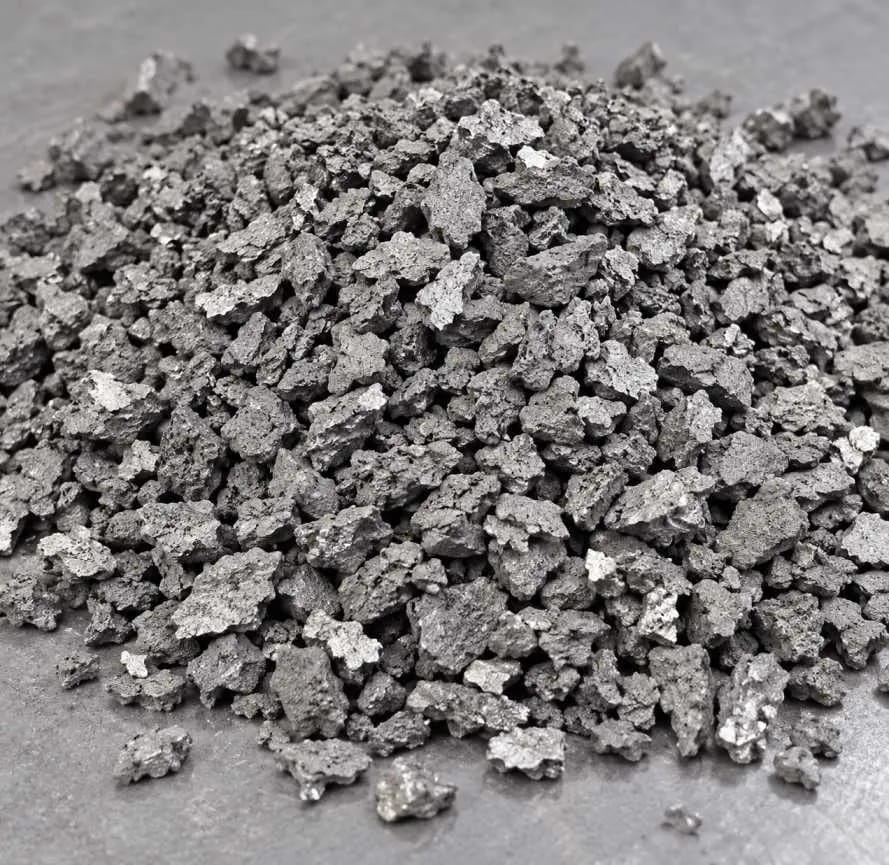
Global titanium sponge prices climbed to their highest level since early 2025 during the second quarter of 2026, and the upward pressure shows no sign of easing as the industry enters Q3. The primary driver is straightforward: commercial aerospace build rates are accelerating faster than sponge capacity can expand. For procurement teams sourcing titanium mill products — sheet, plate, bar, forgings — the implications for pricing, lead times, and allocation are significant.
Sponge Pricing: Where Things Stand
Titanium sponge — the porous, metallic intermediate from which all wrought titanium products originate — traded at approximately USD 12.80–13.50 per kilogram for Grade 1 Kroll-process sponge (CIF Japan) at the end of June 2026. That represents a 14 percent increase from January 2026 and a 22 percent increase year-over-year.
Chinese domestic sponge prices followed a similar trajectory, with 0-grade sponge reaching RMB 75,000–80,000 per tonne in the Baoji spot market. The spread between Chinese and Japanese sponge narrowed to roughly 8 percent, down from the historical average of 12–15 percent, suggesting that Chinese producers are absorbing more of their output domestically rather than competing on export price.
The price floor is set by energy costs — titanium sponge production via the Kroll process is electricity-intensive, consuming roughly 30–40 MWh per tonne of sponge. With industrial electricity prices in both China and Kazakhstan (a growing sponge producer) remaining elevated, marginal production costs provide firm support beneath current price levels.
Demand by Sector: Aerospace Leads, Energy Follows
Aerospace
Boeing and Airbus delivered a combined 105 aircraft per month in Q2 2026, up from 92 per month in Q2 2025. Both manufacturers have publicly committed to further rate increases through 2027, with the A320neo family targeting 75 units per month and the 737 MAX program aiming for 56. Each narrowbody aircraft consumes approximately 15–20 tonnes of titanium in structural forgings, fasteners, landing gear, and engine components. The widebody programs — A350, 787 — use substantially more, with the A350 alone requiring roughly 60 tonnes of titanium per shipset.
This build-rate acceleration translates directly into mill product demand. Forging houses and Tier 1 aerostructure suppliers have been extending their titanium procurement horizons, with some placing orders 18–24 months ahead of need to secure allocation.
New Energy and Chemical Processing
The second-largest demand driver remains the new energy sector, particularly hydrogen electrolysis and lithium battery production equipment. Proton exchange membrane (PEM) electrolyzers use titanium bipolar plates and porous transport layers, and global electrolyzer installations are projected to exceed 25 GW of annual capacity additions in 2026. While each GW of PEM electrolyzer capacity requires only 50–80 tonnes of titanium, the sector's growth rate — roughly 45 percent year-over-year — is adding meaningful incremental demand at the margin.
Chemical processing equipment continues to provide steady baseload demand. Titanium heat exchangers, reactor vessels, and piping systems for chlor-alkali, PTA, and desalination plants generate consistent orders that are less cyclical than aerospace but equally specification-intensive.
Medical
Medical titanium demand remains stable but is not a growth driver at current volumes. The orthopedic implant market is mature in developed economies, and while dental implant volumes continue to grow in emerging markets, the tonnage consumed is modest relative to aerospace and industrial sectors.
China Export Data: First-Half Snapshot
China exported approximately 48,000 tonnes of titanium mill products (bar, sheet, plate, tube, forgings) in the first half of 2026, according to preliminary customs data. That figure is roughly flat compared to H1 2025, but the product mix shifted notably: exports of titanium plate and sheet increased by 11 percent, while bar and billet exports declined by 6 percent.
The geographic distribution also shifted. Southeast Asian markets — particularly Vietnam, Indonesia, and India — increased their share of Chinese titanium imports, driven by expanding chemical processing and power generation infrastructure. European and North American buyers, by contrast, reduced spot purchases from Chinese mills, partly reflecting reshoring preferences and partly reflecting tightening quality requirements that favor established supply relationships over price-driven sourcing.
Supply Side: Capacity Additions and Constraints
Several capacity expansions are progressing but have yet to meaningfully relieve market tightness:
- Sponge: Two new Kroll-process sponge plants in China's Yunnan province (combined capacity ~30,000 tonnes per year) are commissioning but are not expected to reach full output until mid-2027. Kazakhstan's UKTMP continues to expand incrementally, targeting 30,000 tonnes per year by 2027.
- Melting: VAR (vacuum arc remelting) capacity additions at multiple Chinese and Japanese mills are adding roughly 15,000 tonnes of ingot capacity in 2026, but the bottleneck has shifted downstream to rolling and forging.
- Rolling: Hot-rolling capacity for wide plate (>1500 mm) remains constrained globally. Lead times for Grade 5 plate in widths above 1200 mm are currently running 16–20 weeks from major producers, compared to a historical norm of 10–12 weeks.
What This Means for Buyers
For procurement teams planning Q4 2026 and H1 2027 purchases, three considerations stand out:
Lock in pricing early. Sponge costs are unlikely to retreat meaningfully before new capacity comes online in mid-2027. Forward contracts or blanket orders placed now will likely prove cheaper than spot purchases six months from now.
Confirm allocation for critical grades. Grade 5 (Ti-6Al-4V) plate and forging stock are the tightest products in the market. If your program requires aerospace-certified Grade 5 material, confirm allocation with your supplier rather than assuming availability at order time.
Diversify supply relationships. The shift in China's export mix and the tightening of Western quality requirements mean that buyers who rely on a single sourcing channel face higher risk. Working with vertically integrated producers who control their own sponge-to-product chain provides both price stability and traceability assurance.
BAOTI maintains inventory positions across all standard grades and sizes to buffer our customers against market volatility. Contact our sales team for current pricing and lead times on your specific requirements.
Frequently Asked Questions
Why are titanium prices rising in Q3 2026?
Global titanium sponge prices reached an 18-month high due to accelerating commercial aerospace build rates outpacing sponge production capacity. Boeing and Airbus increased combined deliveries to 105 aircraft per month in Q2 2026, driving strong demand for titanium forgings, sheet, and bar.
What are current lead times for titanium plate?
Lead times for Grade 5 (Ti-6Al-4V) plate in widths above 1200 mm are running 16–20 weeks from major producers as of mid-2026, compared to a historical norm of 10–12 weeks. Hot-rolling capacity for wide plate remains the key downstream bottleneck.
How should buyers plan titanium procurement for late 2026?
Buyers should lock in pricing through forward contracts before new sponge capacity comes online in mid-2027, confirm allocation for critical Grade 5 material early, and diversify supply relationships with vertically integrated producers to reduce sourcing risk.
Related Reading

TITANIUM USA 2026: What Buyers and Engineers Should Expect at This Year's Premier Titanium Conference
A preview of TITANIUM USA 2026, the International Titanium Association's annual conference and exhibition in Orlando — covering key themes, exhibitor highlights, technical sessions on additive manufacturing and sustainability, and practical guidance for attendees planning procurement meetings.

Farnborough International Airshow 2026 Highlights: 1,200+ Exhibitors Gather for the World's Largest Aerospace Trade Event
The Farnborough International Airshow 2026 brought together over 1,200 exhibitors and 80,000 trade visitors in Hampshire, UK, featuring aerospace giants Airbus, Boeing, Safran, and Rolls-Royce. BAOTI attended the event to connect with global aerospace buyers and explore new partnership opportunities.

How to Select the Right Titanium Grade for Your Application
A comprehensive guide to titanium grade selection covering commercially pure grades, alpha-beta alloys, corrosion-resistant specialty grades, and medical grades — with clear recommendations for every major industry application.

Titanium Demand in New Energy Vehicles Surges in 2026: What It Means for the Supply Chain
Global titanium consumption in the new energy vehicle sector has grown sharply in 2026, driven by hydrogen fuel cell bipolar plates, EV battery casings, and lightweight structural components. This article examines the market data, key applications, and supply chain implications for titanium producers and buyers.