
How to Select the Right Titanium Grade for Your Application
A comprehensive guide to titanium grade selection covering commercially pure grades, alpha-beta alloys, corrosion-resistant specialty grades, and medical grades — with clear recommendations for every major industry application.
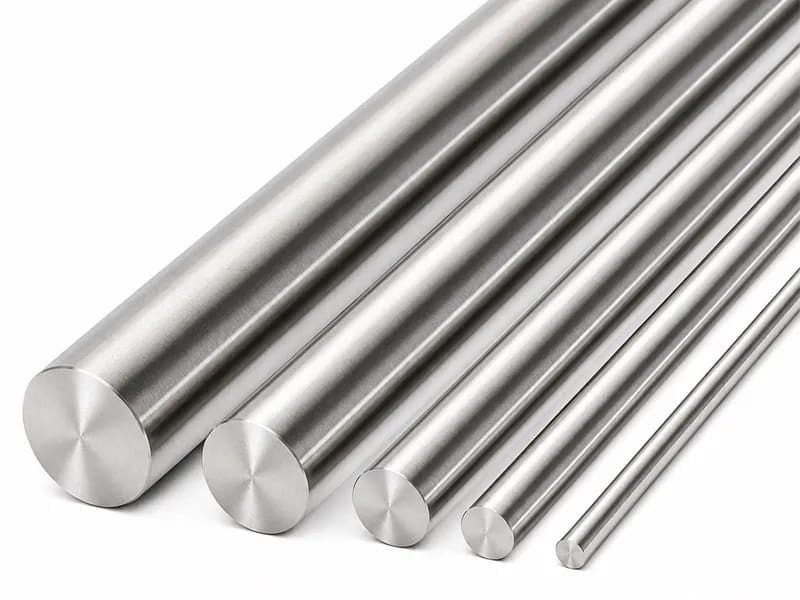
The Challenge of Titanium Grade Selection
With over 40 standardized grades defined across ASTM, AMS, and ISO specifications, selecting the appropriate titanium grade can appear unnecessarily complex — particularly for engineers and procurement professionals whose primary experience is with steel or aluminum alloy systems. In practice, however, the global titanium industry is concentrated around fewer than ten key grades that collectively account for the overwhelming majority of commercial consumption.
The challenge lies not in memorizing specifications, but in understanding the metallurgical logic behind each grade and matching it to the specific demands of your application. A chemical engineer selecting tubing for a seawater heat exchanger faces a fundamentally different optimization problem than an orthopedic device manufacturer selecting bar stock for hip implant stems, even though both are "choosing titanium." This guide provides the technical framework and practical recommendations needed to make that selection with confidence.
Understanding Titanium Classification
Titanium grades fall into four metallurgical categories, each with distinct properties that determine their suitability for specific applications. Understanding this classification system is the first step toward efficient grade selection.
Commercially Pure (CP) Titanium — Grades 1 through 4
Commercially pure titanium grades contain 99%+ titanium with controlled amounts of interstitial elements — primarily oxygen, nitrogen, carbon, and iron. The oxygen content is the principal differentiator between CP grades: higher oxygen produces higher strength but lower ductility and reduced formability. All CP grades share excellent corrosion resistance, good weldability, and moderate cost relative to titanium alloys.
| Grade | UNS Number | O₂ Max (%) | Tensile (MPa) | Yield (MPa) | Elongation | Primary Use |
|---|---|---|---|---|---|---|
| Grade 1 | R50250 | 0.18 | 240–350 | 170–240 | ≥ 24% | Deep drawing, explosive cladding, max formability |
| Grade 2 | R50400 | 0.25 | 345–485 | 275–380 | ≥ 20% | Industry standard — heat exchangers, piping, vessels |
| Grade 3 | R50550 | 0.35 | 450–555 | 380–450 | ≥ 18% | Higher strength CP applications |
| Grade 4 | R50700 | 0.40 | 550–680 | 480–550 | ≥ 15% | Dental implants, high-strength CP |
Grade 2 deserves particular attention as it represents the single most widely consumed titanium grade worldwide. Its combination of moderate strength, excellent corrosion resistance in oxidizing and mildly reducing environments, good weldability per AWS D1.9, and competitive pricing makes it the default selection for chemical processing equipment, condenser and heat exchanger tubing (per ASTM B338), desalination systems, marine piping, and general industrial applications. When evaluating titanium for the first time, Grade 2 should be the starting point — other grades are selected only when specific application requirements exceed its capabilities.
Alpha-Beta Alloys — The High-Strength Workhorses
Alpha-beta titanium alloys contain both alpha-stabilizing elements (typically aluminum) and beta-stabilizing elements (vanadium, molybdenum, or chromium) that produce a two-phase microstructure. This microstructure can be manipulated through heat treatment to achieve a wide range of strength levels, making alpha-beta alloys the primary choice for structural applications where mechanical performance is the driving requirement.
Grade 5 (Ti-6Al-4V) is the defining alloy in this category and in the titanium industry as a whole. Accounting for over 50% of global titanium consumption by weight, Ti-6Al-4V has been the standard aerospace structural alloy since the 1960s. Its tensile strength of 895–1100 MPa (depending on heat treatment condition) combined with a density of only 4.43 g/cm³ gives it the highest specific strength of any commonly available engineering metal. The alloy is specified extensively in AMS 4911 (sheet and plate), AMS 4928 (bar and forgings), and MIL-T-9046 (military sheet and plate).
| Property | Grade 5 Annealed | Grade 5 STA | Grade 23 (ELI) |
|---|---|---|---|
| Tensile Strength (MPa) | 895–1000 | 1030–1100 | 860–965 |
| Yield Strength (MPa) | 828–910 | 965–1030 | 790–880 |
| Elongation (%) | ≥ 10 | ≥ 8 | ≥ 10 |
| Fracture Toughness (MPa√m) | 55–75 | 45–55 | 75–100 |
| Fatigue Endurance Limit (MPa) | ~510 | ~580 | ~490 |
| Max Service Temperature (°C) | 315 | 315 | 315 |
Grade 23 (Ti-6Al-4V ELI) is the Extra Low Interstitial variant of Grade 5, with tightened limits on oxygen (≤0.13%), nitrogen, carbon, and iron. These reductions produce significantly higher fracture toughness and fatigue crack growth resistance, making Grade 23 the mandatory selection for permanent surgical implants per ASTM F136 and for cryogenic applications such as liquid hydrogen tankage in space launch vehicles.
Corrosion-Resistant Specialty Grades
For applications where corrosion resistance beyond that of standard CP titanium is required — particularly in reducing acid environments — several specialty grades have been developed with minor alloying additions that enhance passivity in specific chemical environments.
Grade 7 (Ti-0.2Pd, UNS R52400) is the most important of these specialty grades. The addition of 0.12–0.25% palladium to a Grade 2 base dramatically extends corrosion resistance into reducing acid territory. In NACE International corrosion testing, Grade 7 demonstrates resistance to boiling hydrochloric acid concentrations up to 2%, sulfuric acid up to 10% at elevated temperatures, and crevice corrosion in hot concentrated chloride brines that would attack standard Grade 2. For chlor-alkali plants, PTA reactors, and pharmaceutical equipment handling reducing acid process streams, Grade 7 provides a level of corrosion immunity that no stainless steel or nickel alloy can match.
Grade 12 (Ti-0.3Mo-0.8Ni, UNS R53400) offers a cost-effective alternative to Grade 7 for moderately reducing environments at elevated temperatures. The molybdenum and nickel additions improve resistance to crevice corrosion in hot chloride brines up to approximately 250°C, making it the preferred grade for geothermal heat exchangers, high-temperature desalination equipment, and sour gas (H₂S) environments per NACE MR0175.
Grade 9 (Ti-3Al-2.5V, UNS R56320) occupies a unique position as a cold-workable alloy with approximately 50% higher strength than Grade 2. This combination makes it the standard alloy for aerospace hydraulic tubing (per AMS 4943/4945), subsea umbilical tubing for offshore oil and gas, and high-performance sporting goods including competitive bicycle frames and golf club heads.
Grade Selection Decision Framework
The following framework provides a systematic approach to titanium grade selection based on the primary application requirement. In cases where multiple requirements overlap, the more demanding criterion should govern the selection.
| Primary Requirement | Recommended Grade | ASTM/AMS Standard | Rationale |
|---|---|---|---|
| General corrosion resistance | Grade 2 | ASTM B265, B338, B348 | Best cost-performance balance for 70% of applications |
| Maximum formability / deep drawing | Grade 1 | ASTM B265 | Lowest oxygen = highest ductility |
| High structural strength | Grade 5 (Ti-6Al-4V) | AMS 4911, 4928 | Specific strength unmatched by any steel |
| Permanent surgical implants | Grade 23 (ELI) | ASTM F136 | Regulatory requirement, max fracture toughness |
| Dental implants | Grade 4 | ASTM F67 | Highest CP strength, proven osseointegration |
| Reducing acids (HCl, H₂SO₄) | Grade 7 (Ti-Pd) | ASTM B265, B338 | Palladium extends passivity in reducing media |
| Hot chloride brines (>100°C) | Grade 12 | ASTM B265, B338 | Cost-effective crevice corrosion resistance |
| Aerospace hydraulic tubing | Grade 9 | AMS 4943, 4945 | Strength + cold workability for tube forming |
| Sour gas service (H₂S) | Grade 5 or 29 | NACE MR0175 | SCC immune in H₂S/CO₂ environments |
| Explosive cladding / clad plate | Grade 1 or 2 | ASTM B898 | Formability for bonding to carbon steel |
| Nuclear condenser tubing | Grade 2 | ASTM B338 | 40+ year proven life, ASME Section III |
Industry-Specific Recommendations
Aerospace and Defense
The aerospace industry consumes approximately 40% of global titanium production, with Grade 5 (Ti-6Al-4V) dominating structural applications including fuselage frames, wing spars, landing gear beams, and engine compressor components. For engine applications at temperatures exceeding 315°C, near-alpha alloys such as Ti-6Al-2Sn-4Zr-2Mo (Ti-6242) provide creep resistance up to 540°C. Ultra-high-strength beta alloys including Ti-5Al-5V-5Mo-3Cr (Ti-5553) and Ti-10V-2Fe-3Al (Ti-10-2-3) are increasingly specified for thick-section landing gear forgings where Grade 5 cannot achieve adequate hardenability.
Chemical Processing and Petrochemical
Chemical processing applications are dominated by CP Grade 2 for general service and Grade 7 for reducing acid environments. The equipment forms most commonly specified include shell-and-tube heat exchangers (per ASME Section VIII and TEMA standards), reactor vessels, distillation columns, piping systems, and pump components. Titanium clad plate — Grade 1 or 2 titanium metallurgically bonded to carbon steel per ASTM B898 — provides an economical solution for large pressure vessels where solid titanium construction would be prohibitively expensive.
Marine and Offshore
Marine applications leverage titanium's complete immunity to seawater corrosion. Grade 2 is the standard for condenser tubing, piping systems, heat exchangers, and desalination equipment. Grade 9 is specified for subsea umbilical tubing where both strength and fatigue resistance under dynamic loading are required. Classification societies including ABS, DNV GL, Lloyd's Register, and Bureau Veritas maintain specific approvals for titanium grades used in vessel construction and offshore structural applications.
Medical Devices
Medical-grade titanium operates under stringent regulatory requirements. Grade 23 (Ti-6Al-4V ELI per ASTM F136) is the standard for permanent load-bearing implants including hip and knee joint prostheses, spinal fusion cages, and pedicle screws. Grade 4 (per ASTM F67) is the predominant choice for dental root implants due to its combination of strength and osseointegration performance. All medical titanium must be produced under ISO 13485 quality management with full ISO 10993 biocompatibility documentation.
Key Takeaways
- Grade 2 is the starting point for any industrial titanium application — it covers approximately 70% of all commercial titanium demand with the best balance of corrosion resistance, weldability, and cost.
- Grade 5 (Ti-6Al-4V) is selected when high strength is the primary driver — it accounts for over 50% of global titanium consumption and is the standard aerospace structural alloy.
- Grade 23 (ELI) is a regulatory requirement for permanent surgical implants — its lower interstitial content provides the fracture toughness and fatigue resistance necessary for devices that must survive millions of load cycles inside the human body.
- Grade 7 (Ti-Pd) should be specified for reducing acid environments — particularly hydrochloric acid, dilute sulfuric acid, and severe crevice corrosion conditions where standard CP titanium is insufficient.
- Grade 12 offers a cost-effective solution for hot chloride brines and moderately reducing environments at elevated temperatures, bridging the gap between Grade 2 and Grade 7.
- Material selection should consider total lifecycle cost, including maintenance, downtime, and replacement frequency — not merely the initial per-kilogram price of the raw material.
BAOTI manufactures all titanium grades discussed in this article, in product forms including plate and sheet (ASTM B265), bar and rod (ASTM B348), seamless and welded tube (ASTM B338/B861/B862), wire (ASTM B863), and forgings (ASTM B381). For grade selection assistance on your specific project, contact our metallurgical engineering team — we provide recommendations within 24 hours based on your application environment and performance requirements.
Frequently Asked Questions
What is the most commonly used titanium grade in industry?
Grade 2 commercially pure titanium is the most widely consumed grade worldwide, representing approximately 70% of all industrial titanium applications. Its combination of moderate strength (345–485 MPa tensile), excellent corrosion resistance in oxidizing and chloride environments, good weldability, and competitive pricing makes it the default selection for chemical processing equipment, heat exchangers, marine piping, and desalination systems.
What is the difference between titanium Grade 5 and Grade 23?
Both are Ti-6Al-4V alloys with identical nominal composition, but Grade 23 (ELI — Extra Low Interstitials) has tighter limits on oxygen (≤0.13% vs ≤0.20%), nitrogen, and carbon. These lower interstitial levels produce significantly higher fracture toughness (75–100 vs 55–75 MPa√m) and better fatigue crack growth resistance. Grade 23 is required for permanent surgical implants per ASTM F136, while standard Grade 5 is used for aerospace, marine, and general structural applications.
When should I use Grade 7 titanium instead of Grade 2?
Grade 7 (Ti-0.2Pd) should be specified when the process environment involves reducing acids — particularly hydrochloric acid, dilute sulfuric acid, or phosphoric acid — or when severe crevice corrosion conditions exist at elevated temperatures in chloride-containing media. The palladium addition significantly extends the corrosion resistance envelope beyond what standard Grade 2 can provide. In oxidizing environments such as nitric acid or clean seawater, Grade 2 is fully adequate and Grade 7's cost premium is not justified.
Can titanium Grade 2 be used for aerospace applications?
Grade 2 is used in non-structural aerospace applications including environmental control system ducting, hydraulic line brackets, and corrosion-resistant hardware. However, primary structural components such as airframe bulkheads, engine compressor blades, and landing gear require the substantially higher strength of Grade 5 (Ti-6Al-4V) per AMS 4911/4928, or specialized alloys like Ti-6242 for high-temperature engine applications.
How do I specify titanium when ordering from a manufacturer?
A complete titanium specification should include: the ASTM or AMS grade designation (e.g., ASTM B265 Grade 2), the product form and dimensions, the material condition (annealed, stress-relieved, STA), any applicable industry specifications (ASME, NACE, customer-specific), required testing and certification level (EN 10204 3.1 or 3.2), and the quantity needed. Providing the intended application and operating environment also helps the manufacturer recommend the optimal grade if you are uncertain.
Related Reading

Why Aerospace Engineers Choose Titanium Over Aluminum and Steel
An in-depth look at why titanium dominates modern aircraft design — from structural weight savings and fatigue performance to engine temperature resistance — with real application data from commercial and military programs.

Titanium Heat Exchangers — Performance, Grade Selection, and Lifecycle Economics
A detailed technical guide on titanium heat exchangers covering tube specifications, grade selection by service environment, performance data from global installations, and lifecycle cost analysis versus alternative materials.

Titanium vs Stainless Steel — A Complete Engineering Comparison
An in-depth comparison of titanium and stainless steel for industrial applications, covering mechanical properties, corrosion performance, lifecycle costs, and selection criteria for engineers and procurement professionals.

TITANIUM USA 2026: What Buyers and Engineers Should Expect at This Year's Premier Titanium Conference
A preview of TITANIUM USA 2026, the International Titanium Association's annual conference and exhibition in Orlando — covering key themes, exhibitor highlights, technical sessions on additive manufacturing and sustainability, and practical guidance for attendees planning procurement meetings.