
Titanium vs. Steel (Carbon and Alloy Steel): Strength-to-Weight, Density, and Lifecycle Cost
How does titanium compare against carbon steel and high-strength alloy steels like 4140 and 4340? This data-driven engineering comparison covers density, specific strength, elastic modulus, thermal properties, fatigue endurance, and total lifecycle economics.
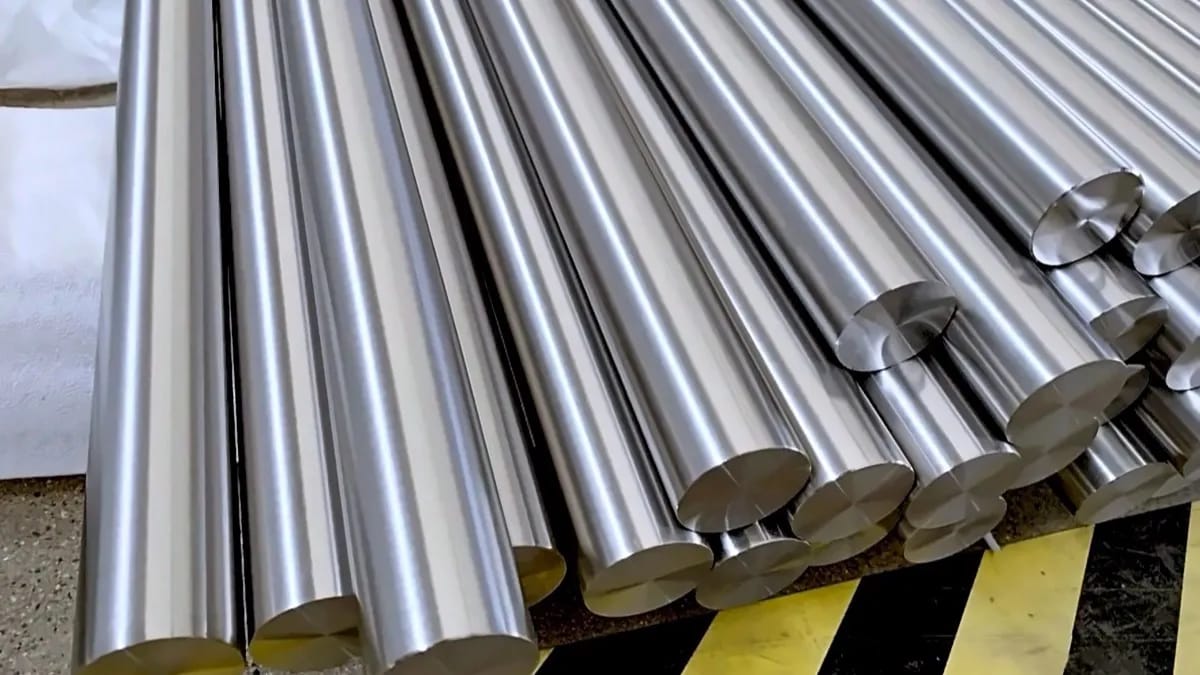
When mechanical engineers evaluate structural metals for high-load, weight-sensitive, or corrosive environments, the fundamental trade-off often comes down to titanium versus steel. Earlier comparisons on our site examined titanium against stainless steels (such as 316L and Duplex 2205) and aluminum alloys (such as 6061-T6 and 7075-T6). However, in heavy machinery, aerospace landing gear, motorsport drivetrains, offshore risers, and defense hardware, the real benchmark is high-strength carbon and low-alloy steels like AISI 4140, AISI 4340, and maraging steels.
A common misconception is that titanium is unconditionally "stronger than steel." In absolute volumetric tensile strength, ultra-high-strength alloy steels can exceed titanium. What makes titanium extraordinary is its specific strength (strength divided by density), combined with complete immunity to atmospheric, marine, and chloride corrosion that destroys unprotected carbon and alloy steels.
Head-to-Head Property Comparison: Titanium vs. Carbon & Alloy Steels
| Physical / Mechanical Property | CP Titanium Grade 2 | Titanium Grade 5 (Ti-6Al-4V Annealed) | Titanium Beta-C / Ti-10V-2Fe-3Al (STA) | Carbon Steel (AISI 1045 Quenched & Tempered) | Cr-Mo Alloy Steel (AISI 4140 Q&T) | Ni-Cr-Mo Aerospace Steel (AISI 4340 Q&T) |
|---|---|---|---|---|---|---|
| Density (g/cm³) | 4.51 | 4.43 | 4.65 – 4.82 | 7.85 | 7.85 | 7.85 |
| Melting Point (°C) | 1,668 | 1,604 – 1,660 | ~1,640 | 1,495 – 1,520 | 1,416 | 1,427 |
| Ultimate Tensile Strength (MPa) | 345 – 485 | 895 – 1,000 | 1,250 – 1,450 | 650 – 850 | 950 – 1,150 | 1,250 – 1,800 |
| Yield Strength (MPa) | 275 – 380 | 828 – 920 | 1,150 – 1,350 | 450 – 600 | 750 – 950 | 1,100 – 1,600 |
| Specific Yield Strength (kN·m/kg) | 61 – 84 | 187 – 208 | 247 – 280 | 57 – 76 | 96 – 121 | 140 – 204 |
| Elastic Modulus — Young's Modulus (GPa) | 103 | 114 | 105 – 110 | 205 | 205 | 207 |
| Elongation at Break (%) | 20 – 28 | 10 – 15 | 6 – 10 | 12 – 16 | 11 – 15 | 10 – 13 |
| Thermal Conductivity (W/m·K) | 21.9 | 6.7 | 7.8 | 49.8 | 42.6 | 44.5 |
| Thermal Expansion ($10^{-6}$/K) | 8.6 | 8.6 | 8.8 | 11.5 | 12.2 | 12.3 |
| Seawater / Atmospheric Corrosion | Immune (0.00 mm/yr) | Immune (0.00 mm/yr) | Immune (0.00 mm/yr) | Rapid rust & pitting | Rapid rust; requires coating/plating | Susceptible to rust & hydrogen embrittlement |
1. The Density Advantage: 43% Lighter per Cubic Centimeter
The single most impactful number in the table above is density:
- Carbon and low-alloy steels have a density of 7.85 g/cm³.
- Grade 5 titanium (Ti-6Al-4V) has a density of 4.43 g/cm³ — 43.5 percent lighter for an identical part geometry.
If you machine a titanium shaft, fastener, or forged bracket to the exact same CAD dimensions as an AISI 4140 alloy steel part, the titanium component weighs 43.5 percent less while delivering virtually identical yield strength (828–920 MPa in the annealed condition, and up to 1,100 MPa in the Solution Treated and Aged [STA] condition).
In rotating, reciprocating, or airborne systems — such as aircraft landing gear beams, turbine engine shafts, high-RPM automotive connecting rods, and subsea riser joints — a 43 percent mass reduction produces secondary compounding benefits: lower centrifugal stress, smaller support bearings, reduced actuator loads, and higher payload capacity.
2. Elastic Modulus (Stiffness): Where Steel Still Leads
While titanium matches or beats alloy steel in strength-to-weight ratio, engineers must pay close attention to Young's modulus (elastic stiffness):
- Steel has an elastic modulus of 205–207 GPa.
- Titanium alloys have an elastic modulus of 103–114 GPa — roughly 55 percent of steel's stiffness.
What does this mean in practice? Under the same elastic load and identical cross-section, a titanium beam or shaft will deflect nearly twice as much as a steel beam before reaching its yield point, and it will return completely to its original shape once unloaded.
- When lower modulus is a disadvantage: In precision machine tool spindles, long unsupported shafts, or deflection-limited structural frames, a direct 1-to-1 geometry swap from steel to titanium will increase elastic deflection. To maintain equal bending stiffness, the designer must increase the moment of inertia (for example, by increasing tube outer diameter by ~16–20%). Even after increasing cross-sectional dimensions to match steel's stiffness, the titanium part still achieves a 25 to 30 percent net weight reduction.
- When lower modulus is an advantage: In springs, orthopedic bone plates, offshore dynamic risers, and impact-absorbing fasteners, titanium's lower elastic modulus is a major engineering asset. A titanium coil or torsion spring requires roughly half the active turns of a steel spring for the same load and deflection, cutting spring weight by up to 60–70 percent. In offshore CATENARY risers, titanium's lower stiffness accommodates wave and vessel motion with half the bending stress generated in steel pipe.
3. Corrosion Fatigue and Hydrogen Embrittlement in High-Strength Steels
On paper, quenched-and-tempered AISI 4340 or 300M steel heat-treated to 1,600–1,800 MPa tensile strength appears to match titanium's specific strength at a fraction of the raw material cost. In real-world operating environments, however, ultra-high-strength steels suffer from two fatal vulnerabilities:
- Corrosion Fatigue Collapse: High-strength carbon and alloy steels have zero natural passivity in humid air, salt spray, or industrial moisture. Even a microscopic rust pit reduces the high-cycle fatigue endurance limit of 4340 steel by 50 to 70 percent. To survive, high-strength steel parts must be cadmium-plated, nickel-plated, or coated with epoxy systems — coatings that chip during installation or maintenance.
- Baking & Hydrogen Embrittlement: Electroplating high-strength steel (>1,200 MPa) introduces atomic hydrogen into the steel grain boundaries, risking sudden brittle fracture under static load unless baked strictly per AMS 2759/9.
Titanium Grade 5 and beta titanium alloys require no plating, no painting, and no sacrificial anodes. Their fatigue endurance limit in aerated 3.5% NaCl seawater is virtually identical to their fatigue limit in dry laboratory air (~500 MPa at $10^7$ cycles for Grade 5).
4. Melting Point and Thermal Behavior
Titanium's melting point (1,668 °C for CP titanium, ~1,604–1,660 °C for Grade 5) is roughly 150–200 °C higher than carbon and alloy steels (~1,420–1,510 °C). In aerospace firewalls, exhaust shrouds, and naval missile blast deflectors, titanium withstands short-duration thermal spikes that would melt aluminum and soften structural steel.
For continuous long-term structural service in air, however, standard titanium alloys are generally rated up to 315–400 °C (and up to 540–600 °C for specialized near-alpha aerospace alloys like Ti-6242S and IMI 834), above which oxygen diffusion slowly forms a brittle surface alpha-case. Additionally, titanium's thermal conductivity (6.7–21.9 W/m·K) is significantly lower than carbon steel's (~43–50 W/m·K), making titanium an effective thermal barrier in cryogenic and high-temperature mounting brackets.
5. Total Cost Analysis: Per-Kilogram Price vs. Installed Part Cost
Procurement teams frequently hesitate when comparing raw material prices per kilogram:
- AISI 4140 / 4340 Alloy Steel Bar: USD 2.50 – 6.00 / kg
- CP Grade 2 Titanium Bar/Plate: USD 20 – 38 / kg
- Grade 5 (Ti-6Al-4V) Titanium Bar/Plate: USD 40 – 75 / kg
However, you buy material by the kilogram, you use it by the cubic centimeter, and you pay for it over the equipment's operating life:
- Volume Adjustment: Because titanium is 43.5% lighter than steel, 1 kg of titanium produces 1.77 times as many parts of the same volume as 1 kg of steel.
- Elimination of Surface Finishing & Maintenance: High-strength steel aerospace or marine parts require pre-plate stress relief, cadmium or zinc-nickel plating, post-plate hydrogen baking, primer painting, and periodic strip-and-recoat overhauls during service. Titanium eliminates 100% of coating and corrosion-maintenance costs.
- Subsea & Chemical Equipment Lifecycle: Analloy steel offshore riser component or chemical reactor flange requires heavy corrosion allowances, cathodic protection, and replacement every 5–10 years. A titanium equivalent operates maintenance-free for 30–40 years.
When to Specify Steel vs. When to Upgrade to Titanium
- Keep Carbon or Alloy Steel when: Weight is irrelevant (e.g., stationary indoor factory bases), maximum elastic stiffness per dollar is the sole requirement, and the environment is dry, indoor, or oil-lubricated.
- Upgrade to Titanium when:
- Reducing structural or rotating mass directly improves fuel efficiency, speed, payload, or dynamic response
- The component operates in seawater, subsea oil and gas, chemical processing, or outdoor marine atmospheres where coating failure on steel leads to corrosion fatigue
- Magnetic neutrality is required (titanium is paramagnetic and non-sparking, whereas carbon and low-alloy steels are strongly ferromagnetic)
- Biocompatibility or cleanroom non-contamination is required
BAOTI helps engineering teams transition high-maintenance steel components to forged, rolled, or CNC-machined titanium alternatives. Contact our engineering team with your current steel part drawing to receive a weight-saving and lifecycle cost comparison.
Frequently Asked Questions
Is titanium stronger than steel?
On a strength-to-weight basis (specific strength), Grade 5 titanium (Ti-6Al-4V) is significantly stronger than almost all carbon and alloy steels, delivering ~895–1,000 MPa tensile strength at only 4.43 g/cm³ density (43.5% lighter than steel's 7.85 g/cm³). In absolute volumetric strength, specialized quenched-and-tempered steels like AISI 4340 can exceed standard titanium, but at nearly double the component weight.
How does titanium's stiffness compare to steel?
Titanium has an elastic modulus (Young's modulus) of 103–114 GPa, which is roughly 55% of steel's 205–207 GPa. This means a titanium part of identical dimensions will flex nearly twice as much as steel under elastic load. When equal stiffness is required, slightly increasing the cross-section of a titanium tube or beam matches steel's rigidity while still saving 25–30% in weight.
Why does titanium outperform high-strength steel in marine and fatigue applications?
High-strength steels like 4140 and 4340 lose 50–70% of their fatigue endurance limit when exposed to moisture or salt water due to microscopic rust pitting, and they are vulnerable to hydrogen embrittlement from protective electroplating. Titanium is completely immune to seawater pitting and maintains its full dry-air fatigue limit in marine environments without coatings.
What is the melting point of titanium compared to steel?
Commercially pure titanium melts at 1,668 °C (3,034 °F) and Grade 5 titanium melts between 1,604 °C and 1,660 °C, which is roughly 150–200 °C higher than carbon and low-alloy steels (1,415–1,520 °C). This makes titanium ideal for aerospace engine firewalls and thermal barriers.
Why is the volume price gap between titanium and steel smaller than the per-kilogram price gap?
Because titanium's density (4.43–4.51 g/cm³) is 43.5% lower than steel's (7.85 g/cm³), 1 kilogram of titanium yields 1.77 times the volume — and 1.77 times as many finished parts — as 1 kilogram of steel.
Related Reading

Titanium vs Aluminum: When to Upgrade and When Aluminum Is Good Enough
A practical engineering comparison of titanium and aluminum alloys — covering strength-to-weight ratio, corrosion resistance, temperature limits, cost per part, and decision criteria for aerospace, marine, chemical, and medical applications.

Commercially Pure Titanium: Grades 1 Through 4 Explained for Industrial Buyers
A concise guide to the four CP titanium grades — Grade 1, 2, 3, and 4 — explaining how oxygen content controls strength and ductility, which grade fits which application, and how to avoid the common specification mistakes that lead to material substitution or part failure.

Q3 2026 Titanium Market Update: Aerospace Demand Drives Sponge Prices to 18-Month High
A quarterly snapshot of global titanium market conditions heading into Q3 2026 — covering sponge pricing, mill product demand by sector, China export volumes, and supply-side capacity changes that procurement teams should factor into forward contracts.

Welding and Custom Fabricating Titanium: Shielding Gas, Weld Color Inspection, and OEM Quality Standards
A practical engineering guide to GTAW (TIG) welding and custom fabricating titanium — covering inert gas shielding above 400 °C, AWS D1.9 weld discoloration acceptance criteria, filler wire selection, and how to qualify a titanium fabrication supplier.