
Titanium vs Aluminum: When to Upgrade and When Aluminum Is Good Enough
A practical engineering comparison of titanium and aluminum alloys — covering strength-to-weight ratio, corrosion resistance, temperature limits, cost per part, and decision criteria for aerospace, marine, chemical, and medical applications.
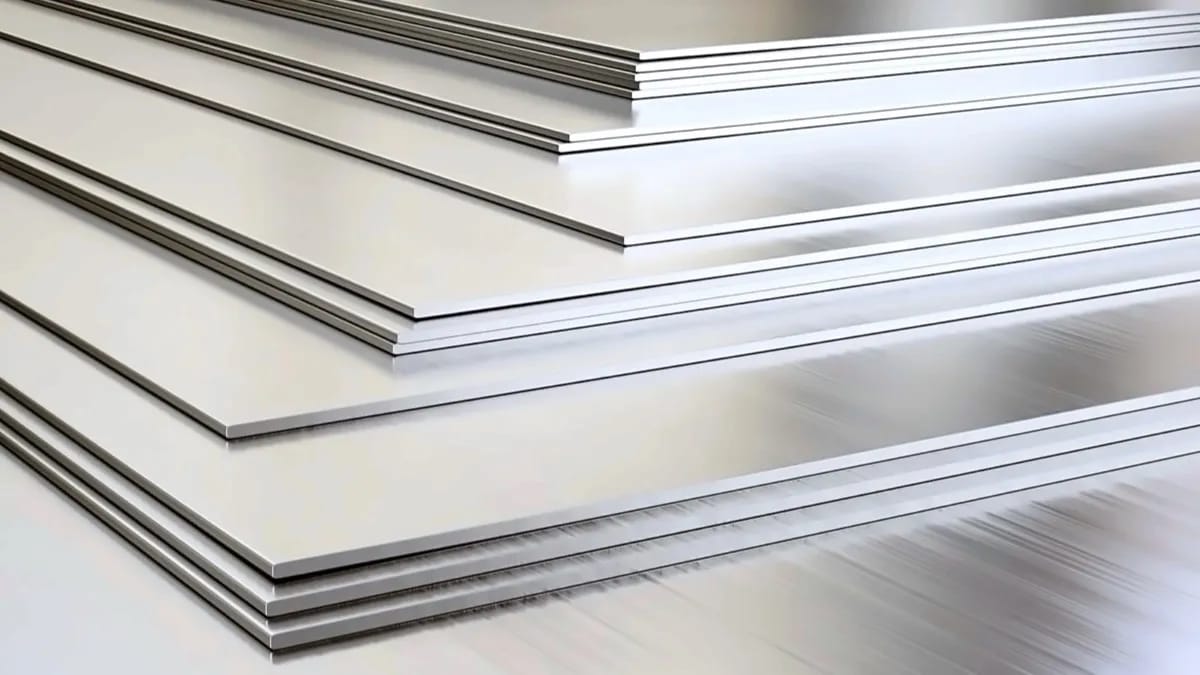
Aluminum is the default lightweight structural material. It is cheap, easy to machine, widely available, and well understood by every machine shop on the planet. So when does it make engineering and economic sense to upgrade to titanium? The answer depends on which of titanium's advantages — corrosion resistance, temperature capability, fatigue life, or biocompatibility — your application actually needs. This guide provides the comparison data to make that decision.
Property Comparison at a Glance
| Property | Ti-6Al-4V (Grade 5) | Al 7075-T6 | Al 6061-T6 | Advantage |
|---|---|---|---|---|
| Density (g/cm³) | 4.43 | 2.81 | 2.70 | Aluminum (37–39% lighter) |
| UTS (MPa) | 895 | 572 | 310 | Titanium (56–189% stronger) |
| Yield strength (MPa) | 828 | 503 | 276 | Titanium (65–200% higher) |
| Specific strength (MPa·cm³/g) | 202 | 204 | 115 | Ti-6Al-4V ≈ 7075-T6 |
| Elastic modulus (GPa) | 114 | 72 | 69 | Titanium (58–65% stiffer) |
| Fatigue limit (MPa, 10⁷ cycles) | 510 | 159 | 97 | Titanium (3.2–5.3× higher) |
| Max service temp (°C) | 315 | 120 | 150 | Titanium (2–2.6× higher) |
| Melting point (°C) | 1,660 | 477–635 | 582–652 | Titanium |
| Thermal conductivity (W/m·K) | 6.7 | 130 | 167 | Aluminum (19–25× better) |
| Corrosion in seawater | Immune | Pitting / crevice | Moderate pitting | Titanium |
| Machinability (relative) | 1.0× | 5–6× | 6–8× | Aluminum (far easier) |
| Raw material cost (USD/kg) | 50–80 | 3–5 | 2–4 | Aluminum (15–25× cheaper) |
The specific strength row is the most important number in the table. Ti-6Al-4V and Al 7075-T6 have nearly identical specific strength — meaning that for a purely weight-optimized tension member, both materials deliver the same strength per unit mass. The difference emerges when other factors — fatigue, temperature, corrosion, or stiffness — enter the design equation.
When Titanium Wins
High-Cycle Fatigue Applications
Titanium's fatigue limit is the single largest differentiator. Ti-6Al-4V has a true endurance limit at approximately 510 MPa — below this stress, the material can endure effectively infinite cycles. Aluminum alloys have no true endurance limit; they continue to accumulate fatigue damage at any stress level. For rotating components, vibrating structures, or any part subjected to millions of load cycles, titanium lasts longer and fails more predictably.
Real-world example: Aircraft landing gear components made from Ti-6Al-4V achieve 60,000+ flight cycles versus 20,000 cycles for 7075-T6 aluminum at equivalent stress levels, reducing replacement frequency by two-thirds.
Corrosive Environments
Titanium is effectively immune to seawater corrosion — its passive oxide film regenerates in milliseconds even when mechanically damaged. Aluminum alloys, despite anodizing and protective coatings, eventually pit and crevice-corrode in chloride environments. The lifecycle cost difference is dramatic: titanium seawater piping lasts 40+ years maintenance-free, while aluminum requires inspection, re-coating, and periodic replacement.
Decision threshold: If your part operates in seawater, brine, wet chlorine, or acidic process fluids for more than 5 years, titanium's higher purchase price is almost certainly recovered through eliminated maintenance and extended service life.
Elevated Temperature Service
Aluminum alloys lose significant strength above 120–150 °C. Ti-6Al-4V retains over 80 percent of its room-temperature strength at 315 °C. For engine components, exhaust systems, high-speed brake assemblies, and process equipment operating above 150 °C, titanium is the only lightweight option.
Biocompatibility
Titanium (Grade 23 ELI) is the gold standard for orthopedic implants, dental implants, and surgical instruments. Aluminum is not biocompatible and cannot be used in implantable devices. This is not a close comparison — it is a binary requirement.
When Aluminum Wins
Cost-Sensitive, Non-Critical Applications
At USD 2–5/kg versus USD 50–80/kg for raw material, aluminum is 15–25 times cheaper. For consumer products, non-structural enclosures, heat sinks (where aluminum's 25× higher thermal conductivity is essential), and any application where the operating environment is benign, aluminum delivers adequate performance at a fraction of the cost.
High-Volume Machined Parts
Aluminum machines 5–8 times faster than titanium, with 3–5 times longer tool life. For high-volume CNC production where machining cost dominates total part cost, the combined savings in cycle time and tooling make aluminum the clear winner unless titanium's properties are specifically required.
Applications Requiring High Thermal Conductivity
Heat exchangers for non-corrosive fluids, LED heat sinks, electronic enclosures, and cookware all benefit from aluminum's thermal conductivity of 130–167 W/m·K versus titanium's 6.7 W/m·K. Titanium is used in heat exchangers only when the process fluid would corrode aluminum or stainless steel.
Lifecycle Cost Analysis
The purchase price comparison alone is misleading. A complete decision requires lifecycle cost analysis:
| Cost Factor | Titanium | Aluminum |
|---|---|---|
| Raw material | 15–25× higher | Baseline |
| Machining | 2–3× higher (slower cuts, more tooling) | Baseline |
| Surface treatment | None required (natural oxide) | Anodizing, chromate, paint |
| Maintenance (corrosive env.) | Near zero | Inspection + re-coating every 3–5 years |
| Replacement frequency | 1× (40+ year life) | 2–4× (10–15 year life in corrosive env.) |
| Downtime cost | Minimal | Significant for scheduled replacements |
| Total 20-year cost | Often lower in corrosive/fatigue applications | Lower in benign environments |
Rule of thumb: If the part operates in a corrosive environment and/or is fatigue-critical, calculate total cost of ownership over the expected service period. If the service life exceeds 10 years, titanium frequently wins on lifecycle cost despite a 5–10× higher initial purchase price.
Decision Framework
Ask these five questions to determine whether to specify titanium or aluminum:
- Does the part operate above 150 °C? → Titanium
- Is the environment corrosive (seawater, acids, chlorides)? → Titanium
- Is the part fatigue-critical (>10⁶ cycles)? → Titanium
- Is the part implanted in the human body? → Titanium (Grade 23)
- None of the above? → Aluminum (unless weight budget is extremely tight)
If your application checks multiple boxes, titanium is almost certainly the right choice. If none apply, aluminum saves cost without sacrificing performance.
BAOTI Supplies Both — We Help You Choose
As a vertically integrated titanium manufacturer, we have no incentive to oversell titanium where aluminum would serve. Our technical sales team regularly advises customers on material selection, including recommending aluminum when titanium's advantages are not load-bearing for the application. When titanium is the right answer, we supply bar, sheet, plate, tube, wire, and forgings in all standard grades with full mill certification.
Frequently Asked Questions
Is titanium stronger than aluminum?
Yes — Ti-6Al-4V has a tensile strength of 895 MPa versus 572 MPa for Al 7075-T6, making it 56% stronger. However, titanium is also 60% heavier (4.43 vs 2.81 g/cm³), so their specific strength (strength-to-weight ratio) is nearly identical. Titanium's real advantages are in fatigue life, corrosion resistance, and temperature capability.
When should I choose titanium over aluminum?
Choose titanium when: the part operates above 150°C, the environment is corrosive (seawater, acids, chlorides), the part is fatigue-critical (over 1 million cycles), or the part is a medical implant. If none of these apply, aluminum is usually more cost-effective.
Is titanium more expensive than aluminum?
Raw titanium costs 15–25× more than aluminum (USD 50–80/kg vs USD 2–5/kg), and machining costs are 2–3× higher. However, in corrosive or high-fatigue applications, titanium's longer service life (40+ years vs 10–15 years) and zero maintenance costs often make it cheaper on a total lifecycle basis.
Why is titanium harder to machine than aluminum?
Titanium's low thermal conductivity concentrates heat at the cutting edge, its chemical reactivity causes tool welding above 500°C, and its low elastic modulus causes spring-back. These factors make titanium machine 5–8× slower than aluminum with 3–5× shorter tool life.
Can titanium replace aluminum in aerospace?
Titanium replaces aluminum in aerospace wherever fatigue life, temperature resistance, or corrosion resistance is required — landing gear, engine mounts, exhaust components, and structural fasteners. Aluminum remains preferred for non-critical skin panels and interior structures where cost and machinability matter more.
Related Reading

Titanium vs. Steel (Carbon and Alloy Steel): Strength-to-Weight, Density, and Lifecycle Cost
How does titanium compare against carbon steel and high-strength alloy steels like 4140 and 4340? This data-driven engineering comparison covers density, specific strength, elastic modulus, thermal properties, fatigue endurance, and total lifecycle economics.

Commercially Pure Titanium: Grades 1 Through 4 Explained for Industrial Buyers
A concise guide to the four CP titanium grades — Grade 1, 2, 3, and 4 — explaining how oxygen content controls strength and ductility, which grade fits which application, and how to avoid the common specification mistakes that lead to material substitution or part failure.

TITANIUM USA 2026: What Buyers and Engineers Should Expect at This Year's Premier Titanium Conference
A preview of TITANIUM USA 2026, the International Titanium Association's annual conference and exhibition in Orlando — covering key themes, exhibitor highlights, technical sessions on additive manufacturing and sustainability, and practical guidance for attendees planning procurement meetings.

Q3 2026 Titanium Market Update: Aerospace Demand Drives Sponge Prices to 18-Month High
A quarterly snapshot of global titanium market conditions heading into Q3 2026 — covering sponge pricing, mill product demand by sector, China export volumes, and supply-side capacity changes that procurement teams should factor into forward contracts.