
Titanium Heat Exchangers — Performance, Grade Selection, and Lifecycle Economics
A detailed technical guide on titanium heat exchangers covering tube specifications, grade selection by service environment, performance data from global installations, and lifecycle cost analysis versus alternative materials.
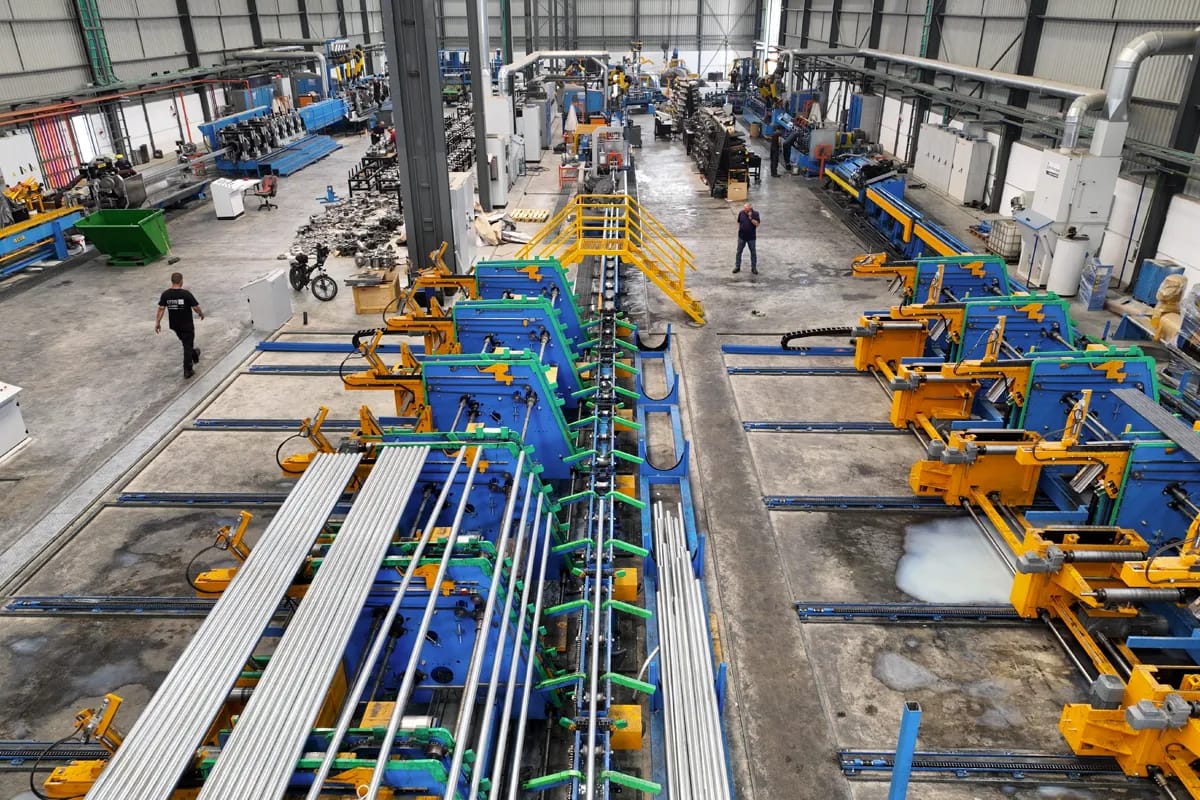
The Case for Titanium in Heat Transfer Equipment
Heat exchangers represent one of the largest and most technically demanding application categories for titanium in the global process industry. The underlying rationale is straightforward: heat exchangers operate at the intersection of high temperatures, aggressive process fluids, and thin-wall tube geometries that are inherently vulnerable to corrosion attack. In these conditions, the choice of tube material directly determines equipment reliability, maintenance costs, and ultimately the total cost of ownership over a 25–40 year operating horizon.
The global installed base of titanium heat exchangers has grown substantially over the past three decades, driven by documented performance advantages in seawater cooling systems, coastal and nuclear power plant condensers, chlor-alkali production, desalination, and petrochemical processing. According to the International Titanium Association (ITA), heat exchanger and condenser tubing now represents approximately 20% of total global titanium mill product consumption — a share that continues to grow as lifecycle cost data from early installations validates the economic case for titanium over alternative tube materials.
Where Titanium Heat Exchangers Deliver Measurable Value
Not every heat exchanger benefits from titanium construction. The material's value proposition is strongest in specific operating environments where conventional materials — stainless steel, copper-nickel, and high-alloy nickel alloys — suffer from predictable, progressive corrosion failures. The following applications represent the proven performance envelope for titanium heat exchange equipment.
Seawater Cooling Systems
Seawater is the most common cooling medium for coastal industrial facilities, offshore platforms, and naval vessels. It is also one of the most aggressive corrosion environments for conventional tube materials due to the combined effects of chloride content (approximately 19,000 ppm), dissolved oxygen, biological activity, and seasonal temperature variations.
Titanium Grade 2 tubing per ASTM B338 has demonstrated complete immunity to seawater corrosion across thousands of installations operating for 40 or more years. This track record spans nuclear and fossil power plant condensers (where individual plants may contain 20,000–30,000 titanium tubes), offshore platform coolers, LNG terminal heat exchangers, and naval vessel cooling systems. The US Navy has standardized on titanium tubing for surface ship condensers following extensive qualification testing that demonstrated zero tube failures over multi-decade service periods.
By contrast, stainless steel 316L tubing in seawater service develops pitting corrosion within 3–5 years at temperatures above 25°C, requiring periodic tube plugging that progressively reduces heat transfer capacity. Copper-nickel 90/10 (UNS C70600) offers better seawater resistance than stainless steel but remains susceptible to erosion-corrosion at flow velocities above 2.5 m/s and accelerated attack in polluted or sulfide-bearing seawater — conditions frequently encountered in tropical and estuarine locations.
Power Plant Condensers
Steam surface condensers in nuclear and thermal power stations present particularly demanding requirements: thin-wall tubing (typically 0.7–1.0 mm wall thickness), high flow velocities on the seawater side, and design lifetimes that must exceed 40 years to align with plant operating licenses. Titanium Grade 2 seamless tubing per ASTM B338 has become the material of choice for new-build and retube projects at coastal power stations worldwide.
The performance data is extensive. A survey of Japanese nuclear power plants published by the Titanium Technology Association documented zero titanium condenser tube failures across more than 30 years of service in units containing 15,000–25,000 tubes per condenser. Similar results have been reported from nuclear stations in South Korea, France, and the United States. The absence of tube failures eliminates unplanned shutdowns for condenser retubing — events that can cost a nuclear plant $1–2 million per day in lost generation revenue.
Desalination Equipment
Multi-stage flash (MSF) and multi-effect distillation (MED) desalination plants operate with highly concentrated hot brine at temperatures ranging from 70°C to 120°C — conditions that rapidly corrode copper alloys and stainless steels. The largest MSF plants in the Persian Gulf region, producing 50,000–100,000 m³/day of freshwater, have adopted titanium heat transfer tubing and clad plate construction as the standard for brine heater and heat recovery sections.
The combination of high chloride concentration (70,000–100,000 ppm in concentrated brine), elevated temperature, and calcium sulfate scaling potential creates an environment where only titanium provides reliable long-term service without the need for periodic acid cleaning or tube replacement. Grade 2 is used for the majority of desalination heat transfer surfaces, with Grade 12 specified for the highest temperature stages where additional resistance to crevice corrosion in hot concentrated brines is required.
Chemical Process Heat Exchangers
In chemical processing, titanium heat exchangers are specified for duties involving wet chlorine gas, hypochlorite solutions, nitric acid at all concentrations, organic acids (acetic, citric, terephthalic), and chloride-contaminated process streams. Shell-and-tube exchangers built to ASME Section VIII and TEMA standards are the most common configuration, though plate-type heat exchangers using titanium plates are increasingly used for duties where their higher heat transfer coefficients and compact footprint provide advantages.
For chemical service involving reducing acids — particularly hydrochloric acid and dilute sulfuric acid — Grade 7 (Ti-0.2Pd) provides the necessary corrosion resistance that standard Grade 2 cannot deliver. The palladium addition extends the passivity envelope of titanium into reducing conditions by shifting the corrosion potential into the passive range, enabling reliable service in environments that would cause active general corrosion of unalloyed titanium.
Tube Specifications and Available Configurations
BAOTI manufactures titanium heat exchanger tubing in two primary forms, each with specific advantages and applicable standards:
Seamless Tubes (ASTM B861 / ASTM B338)
Seamless titanium tubes are produced by extrusion of hollow billets followed by pilger cold rolling and cold drawing to final dimensions. The absence of a weld seam provides uniform wall thickness, consistent grain structure, and the highest reliability for critical applications including nuclear condensers, aerospace heat exchangers, and high-pressure process equipment.
| Specification | Applicable Standard |
|---|---|
| Condenser & heat exchanger tubes | ASTM B338 |
| General purpose seamless pipe | ASTM B861 |
| Nuclear service | ASME SB-338, ASME Section III |
Welded Tubes (ASTM B862 / ASTM B338)
Welded titanium tubes are manufactured from strip by high-frequency induction welding followed by post-weld annealing, sizing, and eddy current inspection of the weld zone. Welded tubes offer a cost advantage of approximately 15–25% over seamless tubes in larger diameters and are fully acceptable for the majority of industrial heat exchanger applications.
Standard Size Range
| Parameter | Range |
|---|---|
| Outside diameter | 6.35 mm (¼") to 50.8 mm (2") standard; up to 114.3 mm (4½") on request |
| Wall thickness | 0.5 mm to 2.77 mm (BWG 12 to BWG 24) |
| Length | Up to 18,000 mm (59 ft) single piece |
| Surface finish | Bright annealed, pickled, or as-welded |
All tubing is supplied with 100% eddy current testing per ASTM E426 and hydrostatic testing per the applicable ASTM specification. EN 10204 3.1 or 3.2 mill test reports accompany every shipment with full chemical composition, mechanical test results, and heat traceability.
Lifecycle Cost Comparison — Quantitative Evidence
The economic justification for titanium heat exchangers rests on documented lifecycle cost data from operating installations. The following analysis is based on composite data from petroleum refinery coolers, coastal power plant condensers, and desalination plant heat recovery sections.
30-Year Total Cost of Ownership — 500-Tube Condenser Bundle
| Cost Element | Titanium Grade 2 | SS 316L | CuNi 90/10 | Alloy 625 |
|---|---|---|---|---|
| Tube material + fabrication | $85,000 | $32,000 | $45,000 | $120,000 |
| Planned retubing events | 0 | 4 | 3 | 1 |
| Retubing cost (labor + material) | $0 | $128,000 | $135,000 | $120,000 |
| Unplanned shutdowns (lost production) | $0 | $200,000 | $150,000 | $50,000 |
| Corrosion monitoring program | $5,000 | $30,000 | $25,000 | $15,000 |
| 30-year total | $90,000 | $390,000 | $355,000 | $305,000 |
| Cost relative to titanium | 1.0× | 4.3× | 3.9× | 3.4× |
The data demonstrates that titanium's initial cost premium — approximately 2.5× that of 316L stainless steel — is recovered within the first avoided retubing event, typically 5–8 years after commissioning. Over the full 30-year analysis period, titanium delivers the lowest total cost of ownership by a substantial margin, driven entirely by eliminated maintenance, zero retubing, and zero unplanned shutdowns.
It is important to emphasize that this cost advantage is specific to corrosive cooling water applications. In clean freshwater or steam-heated duties where corrosion is not a significant factor, stainless steel or carbon steel heat exchangers remain the most economical choice.
Grade Selection Summary for Heat Exchanger Applications
| Service Environment | Recommended Grade | Standard | Notes |
|---|---|---|---|
| Clean seawater cooling | Grade 2 | ASTM B338 | 40+ year proven life |
| Polluted / estuarine seawater | Grade 2 | ASTM B338 | Immune to sulfide-accelerated attack |
| Nuclear power condensers | Grade 2 Seamless | ASME SB-338 | ASME Section III qualified |
| MSF/MED desalination (≤90°C) | Grade 2 | ASTM B338 | Standard for new-build plants |
| Desalination brine heater (>100°C) | Grade 12 | ASTM B338 | Enhanced crevice corrosion resistance |
| Chlor-alkali process coolers | Grade 2 | ASTM B338 | Immune to wet chlorine |
| Reducing acid coolers (HCl, H₂SO₄) | Grade 7 | ASTM B338 | Palladium extends passivity |
| Pharmaceutical process coolers | Grade 2 | ASTM B338 | Non-contaminating, cGMP compatible |
| Offshore platform seawater | Grade 2 | ASTM B338 + DNV | Classification society approved |
Key Takeaways
- Titanium heat exchanger tubing provides 40+ years of maintenance-free service in seawater and aggressive chemical environments — a performance level that no stainless steel, copper alloy, or nickel alloy can match.
- Grade 2 per ASTM B338 covers approximately 90% of heat exchanger applications, with Grade 7 specified for reducing acids and Grade 12 for hot concentrated brines.
- Lifecycle cost analysis consistently demonstrates titanium as the lowest-cost solution in corrosive cooling water service, with 30-year total cost of ownership 3–4× lower than stainless steel or copper-nickel alternatives.
- Both seamless and welded titanium tubes are available — seamless for nuclear and critical service, welded for cost-effective industrial applications. Both undergo 100% eddy current and hydrostatic testing.
- Standard tube sizes cover virtually all commercial heat exchanger designs, with lengths up to 18 meters eliminating the need for tube joints.
- The initial cost premium of titanium is recovered within the first avoided retubing event, typically 5–8 years after installation — making titanium the commercially rational choice for any seawater or aggressive chemical cooling duty.
BAOTI operates integrated seamless and welded titanium tube production lines with annual capacity exceeding 5,000 metric tons. We supply tubing to ASTM B338, B861, B862, and ASME SB-338 specifications in all commercially available grades, with standard delivery of 6–8 weeks for stock sizes. For project quotations, submit your tube datasheet or specification and receive a detailed proposal within 48 hours.
Frequently Asked Questions
How long do titanium heat exchanger tubes last in seawater?
Titanium Grade 2 heat exchanger tubes in seawater service have demonstrated operating lifetimes exceeding 40 years with zero tube failures across thousands of installations worldwide. This performance record includes nuclear and thermal power plant condensers, offshore platform coolers, and desalination plant heat recovery sections operating in tropical and temperate seawater environments.
What ASTM standard covers titanium condenser tubing?
ASTM B338 is the primary specification for titanium and titanium alloy seamless and welded condenser and heat exchanger tubes. For general-purpose seamless pipe, ASTM B861 applies. For welded pipe, ASTM B862 applies. Nuclear service tubing is specified under ASME SB-338 with additional requirements per ASME Boiler and Pressure Vessel Code Section III.
Should I use seamless or welded titanium tubes for my heat exchanger?
Seamless tubes provide the highest reliability and are recommended for nuclear condensers, aerospace heat exchangers, and critical process applications where tube failure would result in significant safety or financial consequences. Welded tubes offer a 15–25% cost saving and are fully acceptable for industrial seawater cooling, desalination, and general chemical service. Both types undergo 100% eddy current testing and hydrostatic testing per the applicable ASTM specification.
What titanium grade is best for desalination heat exchangers?
Grade 2 per ASTM B338 is the standard for most desalination heat transfer surfaces, covering brine temperatures up to approximately 90°C. For the highest-temperature stages in MSF plants where brine temperatures exceed 100°C and chloride concentrations reach 70,000–100,000 ppm, Grade 12 (Ti-0.3Mo-0.8Ni) provides enhanced crevice corrosion resistance at a moderate cost premium over Grade 2.
What is the maximum tube length available for titanium heat exchangers?
BAOTI manufactures titanium heat exchanger tubes in single-piece lengths up to 18,000 mm (approximately 59 feet) for both seamless and welded constructions. This length capability covers virtually all commercial heat exchanger designs without requiring tube-to-tube joints, which are potential corrosion sites. Custom lengths are available on request for specific exchanger configurations.
Related Reading

Why Nothing Corrodes Titanium in Seawater — The Science Behind 40-Year Service Life
A deep technical analysis of titanium's immunity to seawater corrosion — examining the oxide film mechanism, pitting resistance data, real-world performance across naval, offshore, and desalination installations, and what this means for equipment lifecycle costs.

How to Select the Right Titanium Grade for Your Application
A comprehensive guide to titanium grade selection covering commercially pure grades, alpha-beta alloys, corrosion-resistant specialty grades, and medical grades — with clear recommendations for every major industry application.

CNC Machining Titanium: Cutting Parameters, Tool Selection, and Cost Reduction Strategies for Production Shops
A practical engineering guide to CNC machining titanium alloys — covering why titanium is difficult to cut, optimal speeds and feeds for common grades, tooling strategies that extend tool life by 3–5x, and real-world cost data from production environments.

Titanium Sheet and Plate Buyer's Guide: Grades, Sizes, Tolerances, and Ordering Tips
A concise reference for procurement engineers comparing titanium sheet and plate products — covering commercially pure and alloy grades, standard sizes per ASTM B265, surface finishes, and how to specify your order correctly.