
Titanium in Oil and Gas: Where It Outperforms Super Duplex and Nickel Alloys
An application-focused guide to titanium in upstream and downstream oil and gas — covering subsea risers, heat exchangers, downhole tools, and desulfurization equipment, with grade selection data and real-world case studies showing where titanium displaces super duplex stainless steel and nickel alloys.
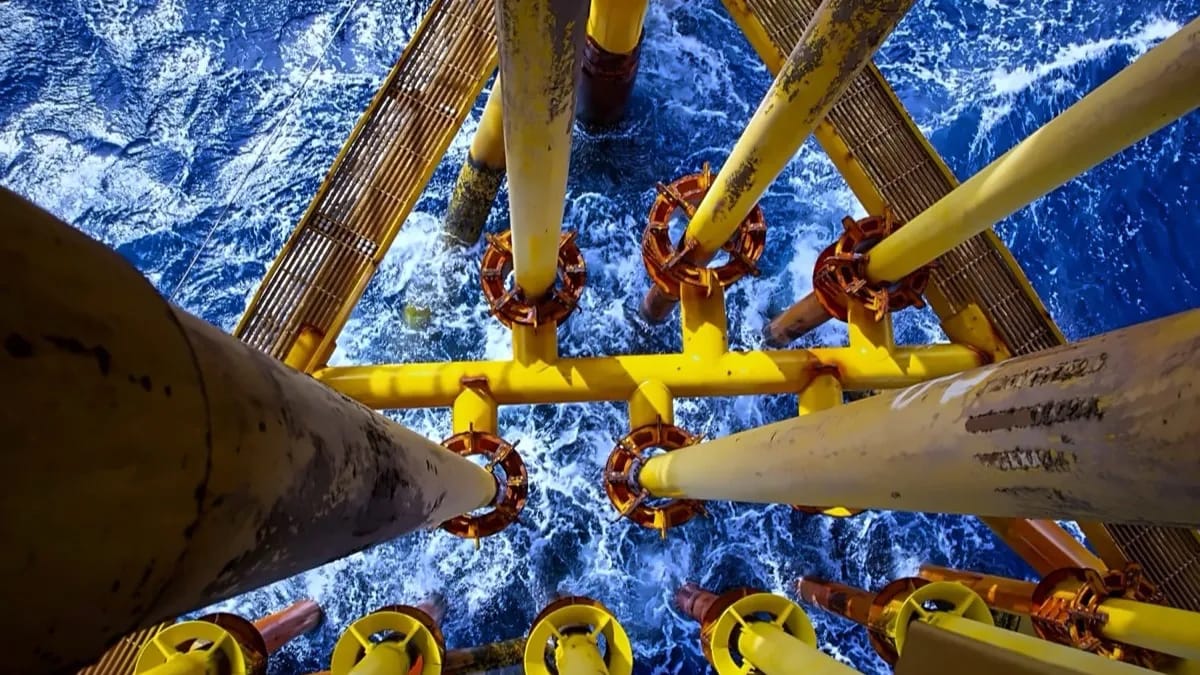
The oil and gas industry specifies titanium where the combination of high chloride concentration, elevated temperature, sour gas (H₂S), and high pressure creates corrosion conditions that defeat even premium stainless steels and nickel alloys. Titanium is not the cheapest option on a per-kilogram basis — but in these severe environments, it is often the cheapest option on a per-year-of-service basis.
Why Oil and Gas Needs Titanium
Three corrosion mechanisms drive titanium adoption in this industry:
Chloride stress corrosion cracking (SCC). Austenitic stainless steels (316L, 317L) crack in hot chloride environments above approximately 60 °C. Super duplex grades (2507, Zeron 100) extend the SCC threshold to roughly 100–120 °C. Titanium is immune to chloride SCC at all temperatures encountered in oil and gas production — a property that eliminates one of the most dangerous failure modes in the industry.
Sour service (H₂S). In wells producing hydrogen sulfide, carbon steel and many stainless steels are susceptible to sulfide stress cracking (SSC) per NACE MR0175. Titanium Grades 2, 7, and 12 are listed as acceptable materials for sour service across the full range of H₂S partial pressures, temperatures, and chloride concentrations defined in the standard.
Microbiologically influenced corrosion (MIC). Seawater-cooled heat exchangers in offshore platforms are vulnerable to MIC from sulfate-reducing bacteria. Titanium's passive film resists biological attack, eliminating the need for biocide treatment programs that add operational cost and environmental liability.
Key Applications and Grade Selection
Offshore Platform Heat Exchangers
Titanium is the standard material for seawater-cooled heat exchangers on offshore platforms. The combination of seawater on the cooling side and hot process fluids on the tube side creates conditions that corrode copper-nickel (70/30 CuNi) and super duplex within 5–10 years.
Grade: Grade 2 (standard), Grade 12 for higher-temperature service Form: Seamless tube per ASTM B338, welded tube per ASTM B862 Service life: 40+ years without tube replacement Case study: A North Sea platform replaced its CuNi heat exchanger bundle with Grade 2 titanium tubes in 2004. As of 2026, the titanium tubes show zero measurable wall loss after 22 years of continuous service. The previous CuNi bundle required replacement every 7 years.
Subsea Risers and Flowlines
Titanium stress joints and riser systems are specified for deepwater production where weight reduction and fatigue life are critical. A titanium riser is approximately 43 percent lighter than an equivalent steel riser, reducing the topside load and allowing smaller, less expensive floating production platforms.
Grade: Grade 23 (Ti-6Al-4V ELI) or Grade 29 (Ti-6Al-4V-0.1Ru) Form: Seamless pipe per API 5LD, forgings per ASTM B381 Key property: Fatigue endurance limit of 500+ MPa ensures riser integrity over 25-year design life under cyclic wave loading
Downhole Equipment
Titanium drill pipe, tool joints, and completion hardware are used in high-temperature, high-pressure (HTHP) wells and extended-reach drilling where the combination of weight, strength, and corrosion resistance creates value.
Grade: Grade 5 (Ti-6Al-4V) for strength, Grade 19 (Ti-3Al-8V-6Cr-4Mo-4Zr) for high-strength/sour service Advantage: Titanium drill pipe weighs 57 percent less than steel drill pipe, enabling longer horizontal reach and reducing hook load on the drilling rig
Flue Gas Desulfurization (FGD)
Downstream refineries and power plants use titanium in FGD scrubber systems where the combination of hot, acidic flue gas and chloride-laden scrubbing liquor corrodes fiber-reinforced plastic (FRP) linings and nickel alloys.
Grade: Grade 2 for general FGD, Grade 7 for reducing acid conditions Form: Plate (ASTM B265), welded pipe (ASTM B862), sheet for duct lining Service life: 30+ years without replacement
Titanium vs Competing Alloys in Oil and Gas
| Property | Grade 2 Ti | Super Duplex 2507 | Alloy 625 (Inconel) | 6Mo (254 SMO) |
|---|---|---|---|---|
| Density (g/cm³) | 4.51 | 7.81 | 8.44 | 8.00 |
| Seawater pitting resistance | Immune | PREN 42 | Immune | PREN 46 |
| Chloride SCC threshold | Immune | ~120 °C | Immune | ~100 °C |
| H₂S resistance (NACE MR0175) | All conditions | Limited | Good | Limited |
| Max seawater service temp | 260 °C | 100 °C | 260 °C | 80 °C |
| Raw material cost (relative) | 1.0× | 0.6× | 1.5× | 0.5× |
| 25-year lifecycle cost | Lowest | Moderate | Highest | Moderate |
The comparison shows why titanium wins in lifecycle cost despite higher initial material price: it operates in conditions where competing alloys require replacement, inspection, or protective coatings that add recurring cost over the 25–40 year design life of offshore and downstream infrastructure.
Fabrication Considerations
Titanium fabrication for oil and gas requires specialized capabilities:
- Welding: All titanium welding must be performed under inert gas shielding (argon) to prevent oxygen and nitrogen contamination. Qualified welders with titanium-specific WPS/PQR documentation are essential.
- Forming: Grade 2 tube and plate can be formed using conventional equipment, but Grade 5 requires hot forming above 600 °C for tight bend radii.
- NDT: Radiographic and ultrasonic inspection per ASME V / API 5LD is standard for pressure-containing titanium components.
- Qualification: First-article qualification per API and operator specifications typically adds 12–16 weeks to the initial order.
Why Source Oil and Gas Titanium From BAOTI
BAOTI supplies titanium tube, pipe, plate, bar, and forgings qualified to ASTM, API, and NACE standards for oil and gas service. Our products are in service on offshore platforms, FPSO vessels, and downstream processing plants across the Middle East, North Sea, Gulf of Mexico, and Southeast Asia. We provide full material traceability, NACE MR0175 compliance documentation, and technical support for grade selection and fabrication planning.
Frequently Asked Questions
Why is titanium used in oil and gas applications?
Titanium is immune to chloride stress corrosion cracking at all temperatures, resistant to H₂S sour service per NACE MR0175, and resistant to microbiologically influenced corrosion. These properties make it the lowest lifecycle cost material for seawater heat exchangers, subsea risers, and sour gas equipment.
What titanium grade is used for offshore heat exchangers?
Grade 2 commercially pure titanium is the standard for seawater-cooled heat exchangers on offshore platforms. It provides 40+ year service life without tube replacement, compared to 5–10 years for copper-nickel and super duplex alternatives.
How does titanium compare to super duplex stainless steel in oil and gas?
Titanium is immune to chloride SCC while super duplex 2507 is limited to approximately 120°C. Titanium handles all H₂S conditions per NACE MR0175 while super duplex has restrictions. Titanium weighs 42% less and lasts 2–4× longer, making it cheaper on a lifecycle basis despite higher initial material cost.
Related Reading

Titanium Pressure Vessels, Reactors, and Condensers: Design Standards and Solid vs. Clad Economics
An engineering and procurement guide to titanium chemical processing equipment — covering ASME Section VIII design rules, solid vs. explosion-clad construction crossover thickness, grade selection for corrosive media, and 30-year lifecycle cost comparisons.

How to Choose Titanium Tubes and Pipes: Seamless vs. Welded, Grade Comparison, and Sizing Guide for Industrial Buyers
A practical decision guide for selecting titanium tubes and pipes — seamless versus welded manufacturing, grade-by-grade comparison for heat exchangers, condensers, and hydraulic systems, plus dimensional standards and ordering specifications per ASTM, ASME, and ISO.

Why Semiconductor Fabs Are Switching to Titanium: Applications in Wet Etch, CVD, and Ultra-Pure Fluid Systems
A technical overview of titanium's growing role in semiconductor manufacturing — covering wet etch baths, CVD chamber components, ultra-pure water systems, and CMP slurry delivery, with grade selection data and contamination control requirements specific to fab environments.

Titanium vs Aluminum: When to Upgrade and When Aluminum Is Good Enough
A practical engineering comparison of titanium and aluminum alloys — covering strength-to-weight ratio, corrosion resistance, temperature limits, cost per part, and decision criteria for aerospace, marine, chemical, and medical applications.