
Titanium in Medical Implants — Why Your Surgeon Trusts This Metal With Your Life
A comprehensive guide to titanium's role in orthopedic, dental, and cardiovascular implants — covering biocompatibility science, regulatory standards, grade specifications, and what makes ASTM F136 the gold standard for permanent human implants.
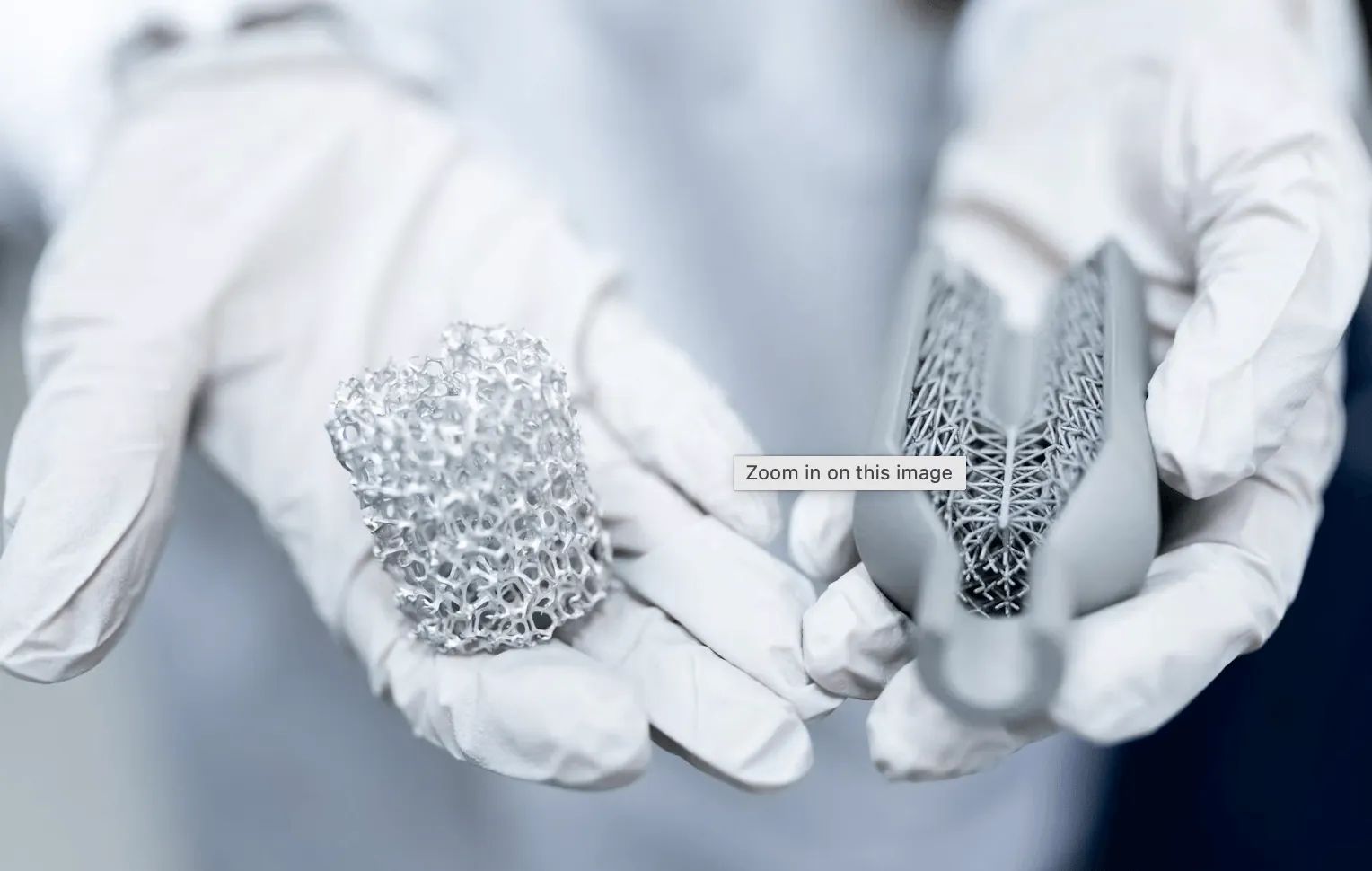
The Metal Inside Millions of People
Right now, an estimated 30 million people worldwide are walking, running, and living normal lives with titanium implants inside their bodies. Hip joints, knee replacements, spinal fusion cages, dental roots, pacemaker housings, bone screws — titanium has become so fundamental to modern medicine that it is difficult to imagine orthopedic surgery without it.
But titanium's dominance in medical devices is not accidental, and it is not simply about strength or corrosion resistance. The story of titanium in medicine is fundamentally a story about biology — specifically, about how the human body responds to a foreign material placed inside it for decades. In this regard, titanium occupies a unique position among engineering metals: the body does not merely tolerate titanium, it actively integrates with it.
This guide examines why titanium became the standard material for permanent human implants, what distinguishes medical-grade titanium from industrial titanium, and what surgeons, device manufacturers, and procurement professionals need to know when specifying titanium for implant applications.
Why the Human Body Accepts Titanium
The Oxide Layer
The foundation of titanium's biocompatibility is a nanometer-thick layer of titanium dioxide (TiO₂) that forms spontaneously on any exposed titanium surface within milliseconds of contact with air or body fluids. This oxide layer is thermodynamically stable in physiological environments — it does not dissolve, does not release metal ions into surrounding tissue at biologically significant rates, and regenerates instantly if mechanically damaged during implant insertion.
By contrast, cobalt-chromium alloys and stainless steels rely on chromium oxide passive films that are less stable in the chloride-rich, slightly acidic environment of body fluids (pH 7.2–7.4, with localized drops to pH 5.5 at surgical sites). These alloys release measurable quantities of metal ions — particularly nickel, chromium, and cobalt — that can trigger adverse tissue reactions including metallosis, pseudotumor formation, and hypersensitivity responses. Titanium's ion release rate in simulated body fluid is orders of magnitude lower than any alternative implant alloy.
Osseointegration
In 1965, Swedish orthopedic surgeon Per-Ingvar Brånemark made an accidental discovery that would transform both dentistry and orthopedics: titanium placed in direct contact with living bone forms a direct structural and functional connection without intervening fibrous tissue. He termed this phenomenon "osseointegration," and it remains the biological mechanism that makes modern dental implants and uncemented joint prostheses possible.
The mechanism is now well understood at the cellular level. Osteoblasts — the cells responsible for new bone formation — adhere preferentially to titanium's oxide surface. They deposit hydroxyapatite crystite (the mineral component of bone) directly onto the implant surface, creating a bone-to-metal interface that can withstand decades of mechanical loading. Surface treatments including acid etching, sandblasting, and plasma spraying enhance this process by increasing surface area and creating micro-topographies that accelerate osteoblast attachment and proliferation.
No other structural metal demonstrates this degree of direct bone bonding. It is the single most important reason why titanium dominates the implant market.
MRI Compatibility
Titanium is paramagnetic — it produces no meaningful magnetic field interaction and does not generate radiofrequency heating in the presence of MRI scanners operating at field strengths up to 3 Tesla. Patients with titanium implants can undergo MRI examinations safely and without image artifact in most clinical protocols.
This is a significant clinical advantage over stainless steel implants (which are ferromagnetic and contraindicated for MRI) and cobalt-chromium implants (which produce substantial image artifacts that can obscure diagnostic information in the region surrounding the implant). As MRI has become the primary diagnostic imaging modality for musculoskeletal, neurological, and cardiovascular assessment, the ability to perform post-operative MRI monitoring without restriction has become a meaningful factor in implant material selection.
Medical-Grade Titanium: What Makes It Different
Not all titanium is suitable for human implantation. The distinction between industrial-grade and medical-grade titanium lies in three areas: chemistry control, quality system requirements, and documentation.
Grade 23 (Ti-6Al-4V ELI) — The Implant Standard
| Parameter | Standard Grade 5 | Grade 23 (ELI) | Why It Matters |
|---|---|---|---|
| Oxygen (max) | 0.20% | 0.13% | Lower O₂ = higher fracture toughness |
| Nitrogen (max) | 0.05% | 0.03% | Lower N₂ = improved fatigue life |
| Carbon (max) | 0.08% | 0.08% | Same limit |
| Iron (max) | 0.30% | 0.25% | Lower Fe = fewer inclusions |
| Hydrogen (max) | 0.015% | 0.012% | Lower H₂ = no hydride embrittlement |
| Tensile (MPa) | 895–1100 | 860–965 | Slightly lower, traded for toughness |
| Fracture Toughness | 55–75 MPa√m | 75–100 MPa√m | 35-45% improvement |
| Fatigue Endurance | ~510 MPa | ~490 MPa | Comparable |
The "ELI" designation — Extra Low Interstitials — refers to the tightened limits on dissolved oxygen, nitrogen, and hydrogen. These interstitial elements occupy positions between titanium atoms in the crystal lattice, increasing strength but reducing ductility and fracture toughness. For an implant that must survive millions of load cycles inside the human body over a 20+ year service life, the trade-off strongly favors toughness over absolute strength.
ASTM F136 is the definitive specification for Ti-6Al-4V ELI for surgical implant applications. It defines not only chemistry and mechanical properties but also microstructure requirements, non-destructive testing, and surface condition — all verified through testing protocols that exceed standard industrial titanium specifications.
Grade 4 (CP Titanium) — The Dental Standard
For dental implants — endosseous root-form implants that are inserted into the jawbone and serve as artificial tooth roots — commercially pure Grade 4 titanium per ASTM F67 is the predominant material choice. Grade 4 offers the highest strength of the CP grades (550–680 MPa tensile) combined with the excellent osseointegration characteristics inherent to unalloyed titanium.
The preference for CP titanium over Ti-6Al-4V in dental applications reflects the lower mechanical loads encountered in the oral environment compared to orthopedic weight-bearing applications. Dental implants typically experience maximum bite forces of 200–800 N, well within the fatigue capability of Grade 4. The absence of alloying elements (aluminum and vanadium) is also viewed favorably from a biocompatibility perspective, although Ti-6Al-4V ELI has been used successfully in millions of orthopedic implants without evidence of alloy-element toxicity.
Clinical Applications
Orthopedic Implants
The largest volume application for medical titanium is in orthopedic joint reconstruction:
Total Hip Arthroplasty: The femoral stem — the component inserted into the medullary canal of the femur — is the primary titanium component in hip replacement. Modern designs feature roughened or porous-coated proximal surfaces that promote biological fixation through bone ingrowth, eliminating the need for bone cement. Ti-6Al-4V ELI stems in uncemented designs have demonstrated survivorship rates exceeding 95% at 20 years in registry data from multiple countries.
Total Knee Arthroplasty: The tibial baseplate (the component fixed to the top of the tibia) is commonly manufactured from Ti-6Al-4V ELI, with a polished cobalt-chromium or oxidized zirconium femoral component articulating against a polyethylene bearing surface. Titanium's lower elastic modulus (114 GPa vs. 210 GPa for CoCr) more closely matches the stiffness of bone (10–30 GPa), reducing stress shielding and associated bone resorption around the implant.
Spinal Fusion: Pedicle screws, rods, interbody fusion cages, and anterior cervical plates are predominantly manufactured from Ti-6Al-4V ELI. The spinal implant market has grown rapidly with the adoption of minimally invasive surgical techniques, and titanium's MRI compatibility is particularly valued in spinal applications where post-operative imaging is frequently required to assess fusion progress and neural decompression.
Trauma Fixation: Plates, screws, intramedullary nails, and external fixation pins for fracture repair. While stainless steel remains used for some temporary trauma fixation devices, titanium is increasingly preferred for its lower infection rate, reduced stress shielding, and MRI compatibility.
Dental Implants
The dental implant market represents approximately 15 million implants placed annually worldwide and is growing at 8–10% per year. A typical dental implant system consists of three components:
- The fixture (the screw-like component inserted into the jawbone) — Grade 4 CP titanium
- The abutment (the connector that protrudes through the gum) — Grade 4 CP titanium or titanium alloy
- The prosthetic crown (the visible tooth replacement) — zirconia or porcelain-fused-to-metal
Success rates for titanium dental implants now exceed 97% at 10 years when placed in adequate bone volume by experienced practitioners, making them one of the most predictable procedures in modern dentistry.
Cardiovascular and Other Applications
Beyond orthopedics and dentistry, titanium serves in numerous implanted medical devices:
- Pacemaker and defibrillator housings: CP titanium enclosures providing biocompatible, hermetically sealed protection for electronic components
- Heart valve components: Titanium structural elements in mechanical heart valves
- Cochlear implant housings: Titanium enclosures for inner-ear electronic implants
- Craniofacial reconstruction: Custom titanium plates and meshes for skull and facial bone repair, increasingly produced by 3D printing (EBM/SLM) for patient-specific geometry
- Surgical instruments: Non-magnetic, autoclave-safe titanium forceps, retractors, and microsurgical instruments
Additive Manufacturing: The Future of Medical Titanium
Electron Beam Melting (EBM) and Selective Laser Melting (SLM) additive manufacturing technologies are transforming medical titanium applications. These processes build implants layer-by-layer from Ti-6Al-4V ELI powder, enabling:
Patient-specific implants: Custom-designed components matched to individual patient anatomy using CT scan data. Particularly valuable for complex craniofacial reconstruction, tumor resection defects, and revision joint replacement where standard implants do not fit.
Porous structures: Engineered porosity that mimics the trabecular (spongy) architecture of natural bone, promoting more rapid and complete bone ingrowth than solid implants. Pore sizes of 300–600 μm and porosity of 60–80% have been shown to optimize osteoblast infiltration and vascularization.
Reduced inventory: Instead of maintaining extensive inventories of implant sizes, manufacturers can produce custom or semi-custom implants on demand, reducing waste and improving surgical outcomes.
BAOTI supplies gas-atomized Ti-6Al-4V ELI spherical powder in particle size distributions of 15–53 μm (for SLM) and 45–106 μm (for EBM), meeting the stringent chemistry, flowability, and density requirements of medical additive manufacturing.
Quality and Regulatory Requirements
Medical titanium procurement operates within a regulatory framework substantially more demanding than standard industrial purchasing:
ISO 13485 — The quality management system standard specific to medical devices. All processes from raw material procurement through final inspection must be documented, validated, and auditable.
ISO 10993 — Biological evaluation of medical devices. Titanium destined for implant applications must be accompanied by biocompatibility test data including cytotoxicity (ISO 10993-5), sensitization (ISO 10993-10), and irritation testing (ISO 10993-23).
ASTM F136 — The material specification for Ti-6Al-4V ELI surgical implant applications, defining chemistry, mechanical properties, microstructure, and NDE requirements.
ASTM F67 — The material specification for unalloyed (CP) titanium for surgical implant applications.
FDA 510(k) / CE Mark — Medical device manufacturers require material documentation packages to support regulatory submissions. These include complete material certificates, biocompatibility reports, processing validation records, and full traceability from finished implant back to the original titanium melt.
Key Takeaways
- Titanium's biocompatibility is unique among structural metals — its stable TiO₂ oxide layer produces minimal ion release, enabling direct bone integration (osseointegration) without fibrous encapsulation.
- Grade 23 (Ti-6Al-4V ELI per ASTM F136) is the standard for permanent load-bearing orthopedic implants — the Extra Low Interstitial chemistry provides 35–45% higher fracture toughness than standard Grade 5, critical for devices that must survive 20+ years of cyclic loading in the body.
- Grade 4 (CP titanium per ASTM F67) dominates dental implantology — with 97%+ success rates at 10 years and excellent osseointegration in the oral environment.
- MRI safety is a decisive clinical advantage — titanium's paramagnetic behavior allows unrestricted MRI scanning, unlike stainless steel (contraindicated) and cobalt-chromium (significant artifact).
- Additive manufacturing is expanding titanium's medical applications — patient-specific implants, engineered porous structures, and on-demand production are changing how orthopedic and craniofacial devices are designed and manufactured.
- Medical titanium requires ISO 13485, ISO 10993 biocompatibility documentation, and full material traceability — regulatory standards that BAOTI maintains across all medical-grade production.
BAOTI supplies medical-grade titanium bar, wire, plate, and powder under ISO 13485 quality management, with complete ASTM F136 / F67 certification and ISO 10993 biocompatibility documentation to support FDA 510(k) and CE Mark regulatory submissions. For medical titanium inquiries, contact our medical devices team — we provide material specifications and quotations within 24 hours.
Frequently Asked Questions
Why is titanium the preferred material for medical implants?
Titanium's dominance in medical implants rests on three unique properties: its titanium dioxide surface layer produces minimal ion release and triggers direct bone bonding (osseointegration) rather than fibrous encapsulation; it is paramagnetic and fully MRI-safe at clinical field strengths; and its elastic modulus (114 GPa) more closely matches bone (10-30 GPa) than steel (210 GPa) or cobalt-chrome (230 GPa), reducing stress shielding and bone loss around the implant. No other structural metal offers all three characteristics simultaneously.
What is the difference between Grade 5 and Grade 23 titanium for implants?
Grade 23 (Ti-6Al-4V ELI per ASTM F136) has tighter limits on oxygen (≤0.13% vs ≤0.20%), nitrogen, and hydrogen compared to standard Grade 5. These lower interstitial levels produce 35-45% higher fracture toughness (75-100 vs 55-75 MPa√m), which is critical for implants that must survive millions of load cycles over 20+ years inside the human body. Standard Grade 5 is NOT suitable for permanent implants — ELI chemistry is a regulatory requirement for load-bearing orthopedic devices.
Can patients with titanium implants have MRI scans?
Yes. Titanium is paramagnetic and produces no meaningful interaction with MRI magnetic fields at clinical strengths up to 3 Tesla. Patients with titanium implants — including hip replacements, spinal hardware, dental implants, and pacemaker housings — can undergo MRI examinations safely without risk of implant movement, heating, or significant image artifact. This is a major advantage over stainless steel implants, which are contraindicated for MRI.
What titanium grade is used for dental implants?
Grade 4 commercially pure titanium per ASTM F67 is the standard for dental root-form implants. It offers the highest strength among CP grades (550-680 MPa tensile) combined with excellent osseointegration in jawbone. Success rates exceed 97% at 10 years. Grade 4 is preferred over Ti-6Al-4V alloy in dental applications because the lower mechanical loads in the oral environment (200-800 N bite force) do not require alloy-level strength, and the absence of aluminum and vanadium is viewed favorably for biocompatibility.
What certifications does medical-grade titanium require?
Medical titanium suppliers must maintain ISO 13485 (medical device quality management) and provide material certified to ASTM F136 (Ti-6Al-4V ELI) or ASTM F67 (CP titanium for implants). Biocompatibility documentation per ISO 10993 — including cytotoxicity, sensitization, and irritation test reports — must accompany the material. Full traceability from finished product to original melt is mandatory. These documentation packages support medical device manufacturers' FDA 510(k) and CE Mark regulatory submissions.
Related Reading

CNC Machining Titanium: Cutting Parameters, Tool Selection, and Cost Reduction Strategies for Production Shops
A practical engineering guide to CNC machining titanium alloys — covering why titanium is difficult to cut, optimal speeds and feeds for common grades, tooling strategies that extend tool life by 3–5x, and real-world cost data from production environments.

Titanium Sheet and Plate Buyer's Guide: Grades, Sizes, Tolerances, and Ordering Tips
A concise reference for procurement engineers comparing titanium sheet and plate products — covering commercially pure and alloy grades, standard sizes per ASTM B265, surface finishes, and how to specify your order correctly.

How to Choose Titanium Tubes and Pipes: Seamless vs. Welded, Grade Comparison, and Sizing Guide for Industrial Buyers
A practical decision guide for selecting titanium tubes and pipes — seamless versus welded manufacturing, grade-by-grade comparison for heat exchangers, condensers, and hydraulic systems, plus dimensional standards and ordering specifications per ASTM, ASME, and ISO.

Titanium Fasteners in Aerospace, Marine, and Chemical Processing: Application Case Studies and Specification Guide
An application-focused guide to titanium fasteners — bolts, screws, nuts, and studs — with real-world case studies from aerospace, marine, and chemical processing industries, grade selection tables, and procurement specifications per ASTM, AMS, and ISO standards.