
Specialty Titanium Alloys Explained: When to Specify Grade 7, Grade 9, Grade 12, and Grade 23
While Grade 2 and Grade 5 account for most industrial volume, extreme environments require specialty titanium alloys. This engineering guide compares Grade 7 (Ti-Pd), Grade 9 (Ti-3Al-2.5V), Grade 12 (Ti-Mo-Ni), and Grade 23 (Ti-6Al-4V ELI) across corrosion limits, mechanical properties, and cost.
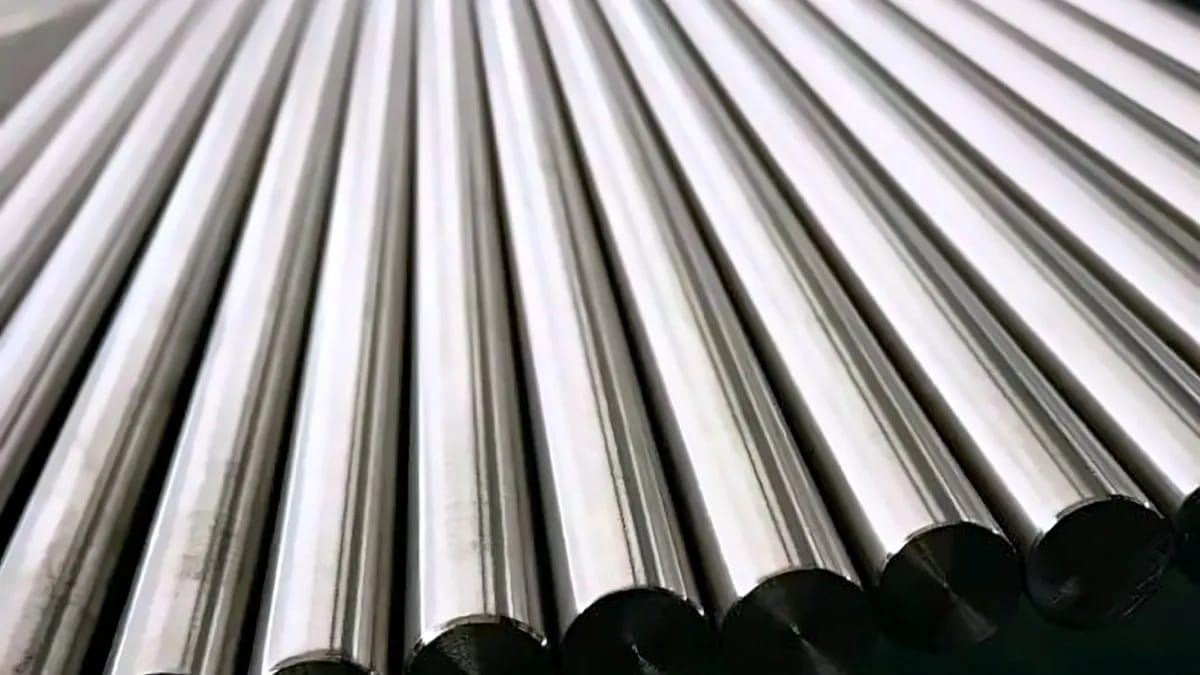
Commercially pure Grade 2 and alpha-beta Grade 5 (Ti-6Al-4V) together satisfy roughly 80 percent of global titanium demand. However, when service conditions push into hot reducing acids, deep-crevice brine environments, high-pressure hydraulic tubing that must be cold-formed, or permanent human implants requiring maximum fracture toughness, neither standard workhorse grade is optimal. That is where the four most important specialty titanium grades — Grade 7, Grade 9, Grade 12, and Grade 23 — enter the specification.
Understanding the metallurgical differences and cost trade-offs among these four grades prevents both premature equipment failure from under-specifying and unnecessary budget overruns from over-specifying.
Quick Comparison Matrix: Grades 7, 9, 12, and 23
| Property / Metric | Grade 7 (UNS R52400) | Grade 9 (UNS R56320) | Grade 12 (UNS R53400) | Grade 23 (UNS R56407) |
|---|---|---|---|---|
| Nominal Composition | Ti-0.15Pd | Ti-3Al-2.5V | Ti-0.3Mo-0.8Ni | Ti-6Al-4V ELI (Low Interstitials) |
| Metallurgical Class | Alpha (CP + Pd) | Near-Alpha / Alpha-Beta | Near-Alpha | Alpha-Beta |
| Min. Tensile Strength (MPa) | 345 | 620 | 483 | 860 |
| Min. Yield Strength (MPa) | 275 | 483 | 345 | 795 |
| Elongation (%) | ≥ 20 | ≥ 15 | ≥ 18 | ≥ 10 |
| Density (g/cm³) | 4.51 | 4.48 | 4.52 | 4.43 |
| Primary Advantage | Extreme crevice & reducing acid corrosion resistance | High-strength cold-formable tubing | Economical crevice corrosion resistance + higher temp strength | Superior fracture toughness & biocompatibility |
| Relative Cost (vs. Grade 2 = 1.0x) | 2.8x – 3.5x | 1.6x – 2.0x | 1.25x – 1.45x | 1.8x – 2.3x |
Grade 7 (Ti-0.15Pd): The Ultimate Corrosion-Resistant Titanium
Physically and mechanically, Grade 7 is identical to Commercially Pure Grade 2 titanium. It has the same minimum tensile strength (345 MPa), yield strength (275 MPa), ductility, and formability. What sets Grade 7 apart is the addition of 0.12 to 0.25 percent palladium (Pd), a noble metal that fundamentally shifts the electrochemical potential of the passive titanium oxide film.
In oxidizing media such as nitric acid or aerated seawater at moderate temperatures, Grade 2 and Grade 7 perform identically because oxygen is readily available to maintain the $\text{TiO}_2$ passive film. However, in dilute reducing acids (such as hydrochloric, sulfuric, or phosphoric acid) and in tight gasket or tube-to-tubesheet crevices where oxygen is depleted and pH drops below 1.5, Grade 2's oxide film can break down. The palladium in Grade 7 creates microscopic cathodic sites on the metal surface that accelerate cathodic depolarizing reactions, shifting the corrosion potential back into the passive region and preventing crevice attack up to 250 °C in saturated brines.
Where to specify Grade 7:
- Heat exchanger tube-to-tubesheet joints and flanged gasket faces in hot chloride service where crevice corrosion would attack Grade 2
- Chemical reactors handling wet chlorine gas, dilute hydrochloric acid, or chlorinated organic intermediates
- Hydrometallurgical pressure acid leach (HPAL) autoclaves and flash vessels
Procurement tip: Because palladium is a precious metal, Grade 7 costs roughly three times as much as Grade 2. A common cost-engineering strategy in chemical plant design is to build the main shell and tubing of a heat exchanger from Grade 2, while specifying Grade 7 only for the flange ring facings or critical crevice regions where gasket compression creates stagnant zones.
Grade 12 (Ti-0.3Mo-0.8Ni): The Cost-Effective Alternative to Grade 7
Because of Grade 7's high palladium surcharge, metallurgists developed Grade 12 by alloying titanium with 0.2–0.4 percent molybdenum and 0.6–0.9 percent nickel. Neither alloying element is a precious metal, keeping raw material cost only 25 to 45 percent above Grade 2 while delivering two major engineering upgrades:
- Crevice corrosion threshold up to 180–200 °C: While Grade 2 becomes susceptible to chloride crevice corrosion around 75–80 °C in neutral brines, Grade 12 resists crevice attack up to nearly 200 °C.
- 40 percent higher ASME design strength at elevated temperature: The molybdenum and nickel additions strengthen the matrix, giving Grade 12 a minimum tensile strength of 483 MPa (versus 345 MPa for Grade 2 and Grade 7). Under ASME Boiler and Pressure Vessel Code Section VIII Division 1, Grade 12 maintains significantly higher allowable design stresses between 150 °C and 300 °C, allowing thinner vessel walls that often offset its higher per-kilogram price.
Where to specify Grade 12:
- Multi-effect distillation (MED) desalination evaporators and brine heaters operating above 80 °C
- Geothermal brine heat exchangers and condenser shells
- Terephthalic acid (PTA) and petrochemical process piping where temperatures and pressures exceed Grade 2's economical wall-thickness range
Grade 9 (Ti-3Al-2.5V): The Cold-Formable Tubing Alloy
Often called "half-6-4" because it contains half the aluminum and vanadium of Grade 5 (Ti-6Al-4V), Grade 9 occupies the sweet spot between commercially pure titanium and high-strength alpha-beta alloys. With a minimum tensile strength of 620 MPa in the annealed condition — and over 860 MPa in the cold-worked and stress-relieved (CWSR) condition — Grade 9 offers nearly double the strength of Grade 2 while retaining cold-rolling and tube-drawing characteristics that Grade 5 cannot match.
Grade 5 cannot be economically cold-drawn into small-diameter seamless hydraulic tubing because its high flow stress and limited room-temperature ductility cause cracking during heavy pilgering passes. Grade 9, by contrast, can be cold-worked 30 to 50 percent per pass using specialized rotary swaging and pilgering mills, producing seamless high-pressure tubing with exceptional fatigue endurance and uniform wall thickness.
Where to specify Grade 9:
- Commercial and military aircraft hydraulic tubing (specified under AMS 4943, AMS 4944, and AMS 4945) operating at 21–35 MPa (3,000–5,000 psi)
- Subsea umbilical tubes and offshore riser control lines requiring high external collapse resistance
- Motorsport exhaust systems, racing bicycle frames, and high-performance honeycombs
Grade 23 (Ti-6Al-4V ELI): Maximum Toughness for Medical and Cryogenic Service
Grade 23 is the Extra-Low Interstitial (ELI) variant of Grade 5 (Ti-6Al-4V). While standard Grade 5 permits up to 0.20 percent oxygen and 0.30 percent iron, Grade 23 caps oxygen at 0.13 percent maximum and iron at 0.25 percent maximum.
Why does a 0.07 percent reduction in oxygen matter? In titanium metallurgy, interstitial atoms (oxygen, nitrogen, carbon, and hydrogen) occupy spaces in the hexagonal close-packed crystal lattice. Higher interstitial content increases static tensile strength slightly (Grade 5 is rated at 895 MPa vs. 860 MPa for Grade 23), but it restricts dislocation slip and reduces fracture toughness ($K_{Ic}$) and fatigue crack propagation resistance. By tightly restricting oxygen during double or triple Vacuum Arc Remelting (VAR), Grade 23 achieves 25 to 35 percent higher plane-strain fracture toughness than standard Grade 5, especially at sub-zero and cryogenic temperatures.
Where to specify Grade 23:
- Permanent orthopedic and trauma implants — hip stems, knee components, intramedullary nails, spinal fusion cages, and bone screws certified to ASTM F136 and ISO 5832-3
- Dental implant fixtures and abutments requiring high high-cycle fatigue life under cyclic masticatory loading
- Liquid hydrogen and liquid oxygen aerospace tanks and cryogenic valves operating down to -196 °C
- Deep-submergence pressure hulls and critical offshore fracture-critical components
Decision Framework for Engineers and Buyers
When choosing among these four specialty grades, apply the following four-step selection rule:
- Is the driver severe reducing acid or chloride crevice corrosion above 80 °C?
- If brine pH is ≥ 3 and temperature is 80–180 °C → choose Grade 12 for the lowest total vessel cost.
- If pH drops below 2, wet chlorine is present, or reducing acids exceed Grade 12's passivity limit → specify Grade 7 (or use Grade 7 solely at flanged crevice interfaces).
- Is the product seamless tubing or cold-formed sheet requiring twice the strength of CP Grade 2?
- Specify Grade 9 (Ti-3Al-2.5V) per ASTM B338 Grade 9 or AMS 4944.
- Is the part a surgical implant, dental fixture, or fracture-critical cryogenic component?
- Specify Grade 23 (Ti-6Al-4V ELI) per ASTM F136 or AMS 4930. Never substitute standard Grade 5 for implantable devices where ASTM F136 is called out on the drawing.
Sourcing Specialty Grades From BAOTI
Because specialty grades represent a smaller percentage of global melt schedules than Grade 2 or Grade 5, distributor stock is often patchy and overpriced in small lots. BAOTI melts Grade 7, Grade 9, Grade 12, and Grade 23 ingots in-house using triple-VAR furnaces and processes them into plate, sheet, bar, seamless tube, and forgings under full AS9100 and ISO 9001 quality control. Contact our metallurgical engineering team with your operating temperature, media chemistry, and ASTM/AMS specification to receive mill-direct pricing and material test certificates (EN 10204 3.1/3.2).
Frequently Asked Questions
What is the difference between Grade 2 and Grade 7 titanium?
Grade 7 has the exact same mechanical properties as Commercially Pure Grade 2 titanium (345 MPa minimum tensile strength, 275 MPa yield strength), but contains 0.12–0.25% palladium. The palladium addition dramatically improves resistance to crevice corrosion in hot chloride brines (up to 250 °C) and extends passivity in dilute reducing acids like hydrochloric and sulfuric acid.
When should I use Grade 12 titanium instead of Grade 7?
Grade 12 (Ti-0.3Mo-0.8Ni) should be specified when service temperatures in chloride brines exceed Grade 2's limit of 80 °C (up to ~190 °C) and pH remains above 3. Because Grade 12 uses molybdenum and nickel instead of palladium, it costs 50–60% less than Grade 7 while providing 40% higher tensile strength for pressure vessel design.
Why is Grade 9 titanium preferred over Grade 5 for hydraulic tubing?
Grade 9 (Ti-3Al-2.5V) can be cold-worked and drawn into seamless thin-wall tubing, whereas Grade 5 (Ti-6Al-4V) has poor room-temperature formability and cracks during heavy cold-drawing passes. Grade 9 offers nearly double the strength of CP Grade 2 while remaining weldable and cold-formable.
What does ELI mean in Grade 23 titanium?
ELI stands for Extra-Low Interstitials. Grade 23 (Ti-6Al-4V ELI) restricts oxygen content to a maximum of 0.13% (compared to 0.20% in standard Grade 5) and limits iron and nitrogen. Lower interstitial content increases fracture toughness, fatigue crack growth resistance, and cryogenic ductility, making Grade 23 the standard for ASTM F136 medical implants.
Can Grade 7 titanium be welded to Grade 2 titanium?
Yes. Grade 7 and Grade 2 are fully weldable to each other using ERTi-7 filler wire. In chemical process equipment, engineers frequently weld Grade 7 flange rings or nozzle necks onto Grade 2 vessel shells so that only the high-risk gasket crevice zones contain palladium, reducing total equipment cost by 40–60%.
Related Reading

Commercially Pure Titanium: Grades 1 Through 4 Explained for Industrial Buyers
A concise guide to the four CP titanium grades — Grade 1, 2, 3, and 4 — explaining how oxygen content controls strength and ductility, which grade fits which application, and how to avoid the common specification mistakes that lead to material substitution or part failure.

Grade 2 vs Grade 5 Titanium: A Head-to-Head Comparison for Engineers and Buyers
A direct comparison of the two most widely specified titanium grades — commercially pure Grade 2 and alloy Grade 5 (Ti-6Al-4V) — covering mechanical properties, corrosion behavior, machinability, cost, and decision criteria by application.

Titanium vs. Steel (Carbon and Alloy Steel): Strength-to-Weight, Density, and Lifecycle Cost
How does titanium compare against carbon steel and high-strength alloy steels like 4140 and 4340? This data-driven engineering comparison covers density, specific strength, elastic modulus, thermal properties, fatigue endurance, and total lifecycle economics.

Titanium vs Aluminum: When to Upgrade and When Aluminum Is Good Enough
A practical engineering comparison of titanium and aluminum alloys — covering strength-to-weight ratio, corrosion resistance, temperature limits, cost per part, and decision criteria for aerospace, marine, chemical, and medical applications.