
Titanium Casting: Investment Casting vs. Sand Casting — Process Selection, Grade Guide, and Buyer's Checklist
A procurement-focused guide to titanium casting — comparing investment casting and sand casting processes, covering castable grades per ASTM B367, typical tolerances and surface finishes, and practical ordering advice for aerospace, marine, and industrial buyers.
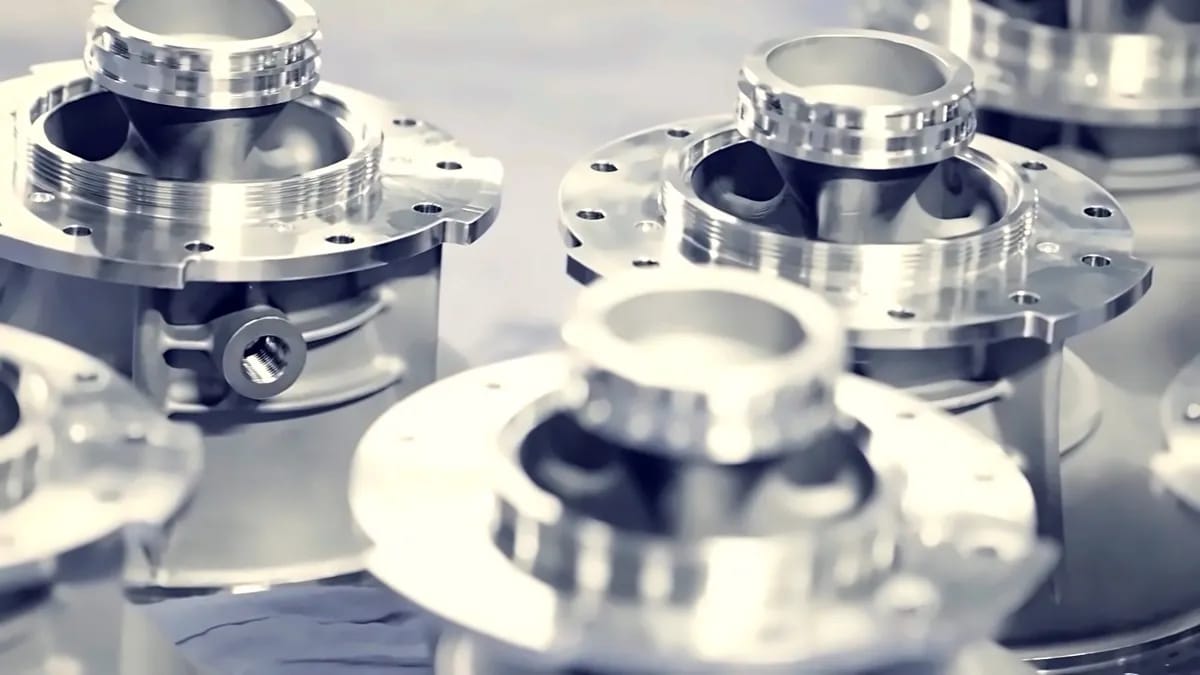
When a titanium component has complex geometry that would require extensive machining from billet — deep internal passages, thin walls, organic shapes, or large near-net-shape structures — casting becomes the economically rational manufacturing route. Titanium casting eliminates 60–90 percent of the material removal required by machining from solid, reducing both raw material consumption and cycle time. But titanium's reactivity at molten temperatures makes casting significantly more challenging than casting steel or aluminum. This guide covers what buyers need to know.
Why Titanium Casting Is Different
Molten titanium reacts aggressively with oxygen, nitrogen, and virtually all conventional refractory materials. At its melting point of 1,660 °C, liquid titanium dissolves the ceramic molds and crucibles used in steel and aluminum foundries. This reactivity imposes three constraints that define titanium casting practice:
Vacuum or inert atmosphere melting. Titanium must be melted in vacuum (typically below 10⁻³ mbar) or under argon atmosphere to prevent oxygen and nitrogen pickup that would embrittle the casting.
Specialized mold materials. Conventional silica-based investment molds react with molten titanium. Titanium investment casting uses ceramic shells based on yttria (Y₂O₃), zirconia (ZrO₂), or graphite-lined molds that resist reaction with the melt.
Skull melting. Most titanium foundries use vacuum arc skull melting (VASM) or induction skull melting (ISM), where the titanium charge is melted in a water-cooled copper crucible. A thin "skull" of solidified titanium forms on the crucible wall, preventing copper contamination of the melt.
These constraints make titanium casting more capital-intensive and technically demanding than steel or aluminum casting, which is reflected in higher per-part pricing. However, for complex geometries, the total part cost is often 30–50 percent lower than machining from billet because material waste drops from 80–95 percent (machined) to 10–30 percent (cast + finish machined).
Investment Casting vs. Sand Casting
| Feature | Investment Casting | Sand / Rammed Graphite Casting |
|---|---|---|
| Typical part weight | 0.05–100 kg | 5–500+ kg |
| Dimensional tolerance | ±0.3–0.8 mm | ±1.5–3.0 mm |
| Surface finish (Ra) | 3.2–6.3 μm | 12–25 μm |
| Minimum wall thickness | 1.5–2.0 mm | 4–6 mm |
| Geometric complexity | Very high (internal passages, undercuts) | Moderate |
| Tooling cost | USD 5,000–50,000 (wax injection die) | USD 2,000–15,000 (pattern) |
| Lead time (first article) | 12–20 weeks | 8–14 weeks |
| Production volume sweet spot | 20–5,000 parts/year | 1–100 parts/year |
| Typical applications | Aerospace brackets, medical implants, pump impellers | Marine valve bodies, large structural nodes, pump housings |
Investment casting (lost-wax process) delivers the tightest tolerances and best surface finish. A wax pattern is injection-molded, coated with ceramic shell (yttria-based for titanium), dewaxed, and filled with molten titanium under vacuum. The result is a near-net-shape casting that requires only minimal finish machining on critical surfaces.
Sand casting (typically rammed graphite for titanium) uses graphite molds that resist reaction with molten titanium. It handles larger parts and lower volumes at lower tooling cost, but delivers coarser tolerances and surface finish. Sand-cast titanium parts always require more post-cast machining than investment castings.
Castable Grades (ASTM B367)
| Grade | Composition | UTS (MPa) | YS (MPa) | Elongation (%) | Key Applications |
|---|---|---|---|---|---|
| C-2 | CP Ti | ≥345 | ≥275 | ≥20 | Corrosion-resistant valve bodies, pump housings |
| C-3 | CP Ti, higher O | ≥448 | ≥345 | ≥15 | General industrial castings |
| C-5 | Ti-6Al-4V | ≥827 | ≥758 | ≥6 | Aerospace structural, engine components |
| C-23 | Ti-6Al-4V ELI | ≥793 | ≥724 | ≥6 | Medical implants (hip, knee components) |
Note that cast titanium has slightly lower mechanical properties than wrought (forged or rolled) titanium of the same composition. This is due to the coarser grain structure inherent in the casting process. For most applications, the difference is accounted for in design allowables. For fracture-critical aerospace parts, hot isostatic pressing (HIP) is specified to close internal porosity and improve fatigue properties.
Hot Isostatic Pressing (HIP)
HIP subjects the casting to high temperature (typically 900–950 °C for Ti-6Al-4V) and high pressure (100–200 MPa argon) simultaneously. This closes internal microporosity, heals subsurface shrinkage defects, and homogenizes the microstructure. The result is a casting with fatigue properties approaching those of wrought material.
HIP is standard practice for:
- All aerospace titanium castings (per AMS 4985 / AMS 4991)
- Medical implant castings (per ASTM F1108)
- Any casting where fatigue or fracture toughness is design-critical
For non-critical industrial castings (valve bodies, pump housings, marine fittings), HIP is optional and adds approximately 15–25 percent to casting cost.
Post-Cast Operations
Most titanium castings require several post-cast operations before they are ready for assembly:
- Mold knockout and gating removal — ceramic shell is mechanically removed; gates and risers are cut off
- Surface cleaning — chemical milling (acid bath) removes the alpha case layer that forms during solidification. Alpha case is an oxygen-enriched surface layer that is hard, brittle, and must be removed from all functional surfaces
- HIP (if specified) — closes internal porosity
- Finish machining — critical dimensions, mating surfaces, and threaded features are CNC machined to final tolerance
- NDT inspection — radiographic (X-ray) and fluorescent penetrant inspection (FPI) per ASTM E1742 and ASTM E165
- Heat treatment — stress relief or solution treat + age, depending on grade and application
How to Order
A complete titanium casting RFQ should include:
- 3D model or 2D drawing with dimensional tolerances and surface finish callouts
- Grade — ASTM B367 C-2, C-5, etc.
- Specification — ASTM B367, AMS 4985, AMS 4991, or customer spec
- HIP requirement — yes/no, with applicable HIP specification
- NDT requirements — X-ray class (per ASTM E1742), FPI acceptance criteria
- Quantity and delivery schedule — annual volume and lot sizes
- Certification — EN 10204 3.1 or 3.2; AS9100 for aerospace
- Alpha case removal — specify if chemical milling is required on all surfaces
Why Cast With BAOTI
BAOTI operates vacuum arc skull melting furnaces and maintains investment casting capability for titanium parts from 50 grams to 100 kg. Our foundry is qualified to ASTM B367 and AMS 4985, with in-house HIP, chemical milling, CNC finish machining, and full NDT capability including X-ray and FPI. This single-source approach eliminates the coordination overhead of managing separate foundry, HIP, and machining vendors — and provides single-lot traceability from melt charge to finished casting.
Frequently Asked Questions
What is the difference between titanium investment casting and sand casting?
Investment casting (lost-wax) delivers tighter tolerances (±0.3–0.8 mm), better surface finish (Ra 3.2–6.3 μm), and thinner walls (1.5 mm min), making it ideal for complex aerospace and medical parts. Sand casting handles larger parts (up to 500+ kg) at lower tooling cost but with coarser tolerances (±1.5–3.0 mm).
What grades of titanium can be cast?
Per ASTM B367, common castable grades include C-2 (commercially pure Ti for corrosion-resistant parts), C-5 (Ti-6Al-4V for aerospace structural components), and C-23 (Ti-6Al-4V ELI for medical implants). Cast titanium has slightly lower mechanical properties than wrought material of the same composition.
Is HIP required for titanium castings?
Hot isostatic pressing (HIP) is mandatory for all aerospace titanium castings (per AMS 4985/4991) and medical implant castings (per ASTM F1108). It closes internal porosity and improves fatigue life. For non-critical industrial castings, HIP is optional but adds approximately 15–25% to cost.
Related Reading

Sourcing Custom Titanium Machined Parts: Tolerances, Surface Finishes, and OEM Ordering Guide
A practical procurement guide for buyers ordering custom CNC-machined titanium parts — covering achievable ISO 2768 tolerances, surface finish specifications, near-net forging vs. bar-stock machining economics, and incoming quality inspection checklists.

Titanium vs. Steel (Carbon and Alloy Steel): Strength-to-Weight, Density, and Lifecycle Cost
How does titanium compare against carbon steel and high-strength alloy steels like 4140 and 4340? This data-driven engineering comparison covers density, specific strength, elastic modulus, thermal properties, fatigue endurance, and total lifecycle economics.

Welding and Custom Fabricating Titanium: Shielding Gas, Weld Color Inspection, and OEM Quality Standards
A practical engineering guide to GTAW (TIG) welding and custom fabricating titanium — covering inert gas shielding above 400 °C, AWS D1.9 weld discoloration acceptance criteria, filler wire selection, and how to qualify a titanium fabrication supplier.

Titanium Pressure Vessels, Reactors, and Condensers: Design Standards and Solid vs. Clad Economics
An engineering and procurement guide to titanium chemical processing equipment — covering ASME Section VIII design rules, solid vs. explosion-clad construction crossover thickness, grade selection for corrosive media, and 30-year lifecycle cost comparisons.